Fruits Dogs Can Eat | Benefits & Risks
✍ Written by a licensed veterinarian (DVM) · ✅ Reviewed by a second licensed veterinarian (DVM)
Not every fruit that is good for people is safe for dogs. Some are healthy treats. Some need careful prep. And a few can send your dog to the emergency vet. This guide covers over 50 fruits, explains exactly which ones are safe, which need caution, and which ones to never share, all checked and reviewed by licensed veterinarians.
QUICK ANSWER
Which Fruits Are Safe, Risky, or Toxic for Dogs?
✅ Safe Fruits (in moderation, prepared correctly) Apple · Banana · Blueberries · Watermelon · Strawberries · Mango · Pear · Cantaloupe · Pineapple · Peach · Kiwi · Papaya · Honeydew
⚠ Feed With Caution Orange · Coconut · Cranberries · Raspberries · Blackberries
❌ Toxic — Never Feed These Grapes · Raisins · Cherries · Avocado · Lemon · Lime · Grapefruit · Currants · Sultanas
Newest Articles
Can Dogs Eat Fruit?
Yes, but it depends on the fruit and how you serve it. Dogs are omnivores, which means their digestive systems can handle both animal protein and plant-based foods, including many fruits. That said, fruit is not a meal replacement for dogs. It is a treat, and like any treat, the right amount and the right preparation make all the difference.
Many fruits offer real nutritional value when given occasionally. According to the UC Davis School of Veterinary Medicine, fruits and vegetables are good treat options for dogs because they tend to be low in protein, fat, sodium, and phosphorus. A 2022 review published in the Journal of Animal Physiology and Animal Nutrition by Tanprasertsuk, Tate, and Shmalberg confirmed that plant-based ingredients, including fruits, provide phytonutrients that may support immune health, digestive function, and cardiovascular health in dogs. Still, fruit is not something most dogs need in their diet. Think of it as a bonus, not a staple.
Why Fruit Is a Treat, Not a Meal
A complete, balanced commercial dog food already provides everything your dog needs: proteins, fats, carbohydrates, vitamins, and minerals. Adding fruit on top of that is fine in small amounts, but it should never crowd out the balanced food that covers your dog’s nutritional needs. The UC Davis School of Veterinary Medicine advises that all treats, including fruit and other extras, stay at or below 10 percent of your dog’s daily calorie intake. The other 90 percent should come from a complete, balanced diet.
To put that in real terms: a 20-pound dog eating around 600 calories a day has a treat budget of about 60 calories. One medium banana alone runs about 89 calories, which already pushes past that limit. Small pieces given occasionally are the right approach for almost every fruit on this list.
The Sugar Question
Fruit contains natural sugar in the form of fructose. Whole fruit handles better than added sugar because the fiber in fruit slows how quickly that sugar enters the bloodstream. But too much fruit can still cause loose stools, stomach upset, and unnecessary weight gain, especially in smaller dogs. High-sugar fruits like bananas, mangoes, and figs should be given less often than lower-sugar options like blueberries, watermelon, and raspberries. For dogs managing diabetes or obesity, even safe fruits can affect blood sugar levels and should only be added to the diet after talking with your vet.
Fresh, Frozen, Canned, or Dried?
The form of fruit matters just as much as the type. Fresh fruit and plain frozen fruit are the safest choices. Canned fruit is almost always packed in syrup loaded with added sugar, which is not appropriate for dogs. Dried fruit is more concentrated in sugar than fresh fruit, and some dried varieties, especially raisins, are extremely toxic to dogs and must be completely avoided. Always read labels on any packaged fruit product before sharing it with your dog, and when in doubt, go fresh.
Seeds, Pits, Skins, and Rinds
Several parts of otherwise safe fruits are dangerous on their own. The seeds and pits found in apples, cherries, peaches, mangoes, and plums contain cyanogenic compounds. According to Vetnique’s veterinary advisory board, cyanide compounds in fruit pits interfere with the body’s ability to use oxygen at the cellular level. Pits also pose a serious choking risk and can block the intestines if swallowed whole. Rinds and peels, like watermelon rind and citrus peel, are hard to digest and commonly cause stomach upset. The rule is simple: wash fruit, remove seeds, remove pits, peel off skin or rind, and cut everything into small pieces before it reaches your dog’s bowl.
When Dogs Should Not Eat Fruit
Some dogs should skip fruit entirely unless a vet gives the go-ahead. Dogs with diabetes, obesity, kidney disease, bladder stones, pancreatitis, or gastrointestinal conditions may be harmed by the sugars, oxalates, or fiber levels found in certain fruits. Puppies can enjoy small amounts of safe fruit, but their digestive systems are still developing, so always introduce any new food slowly and watch for reactions. If your dog has any health condition at all, check with your veterinarian before adding fruit to the routine.
If Your Dog Ate a Toxic Fruit
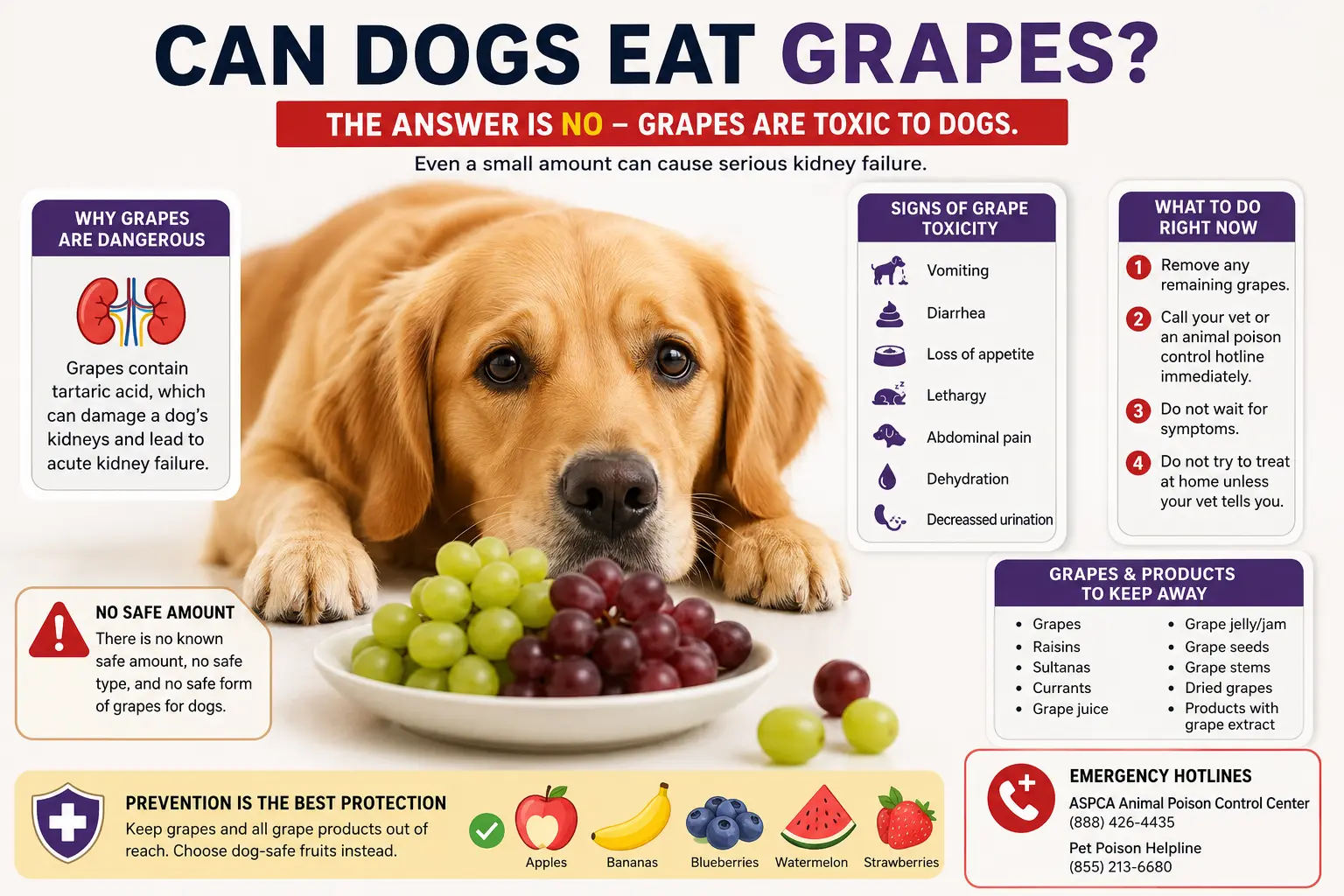
Do not wait to see if symptoms appear. If your dog eats grapes, raisins, currants, cherries, or avocado, call your veterinarian or the ASPCA Animal Poison Control Center at (888) 426-4435 right away. With grape and raisin toxicity especially, early treatment, including induced vomiting within the first four hours, dramatically improves outcomes. Time matters.
Fruits Dogs Can Eat, Full List
🍎 Apple ✅ Safe
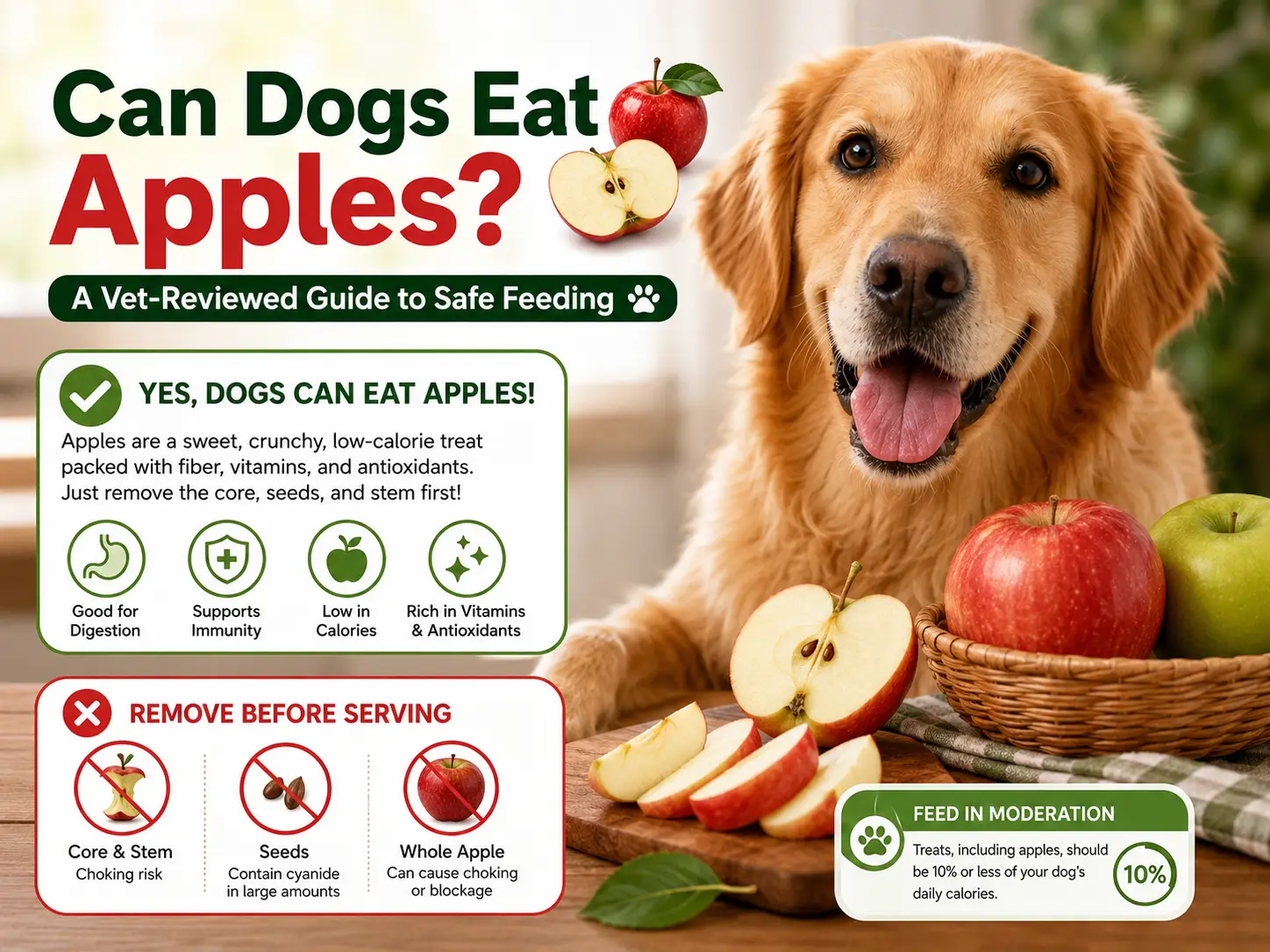
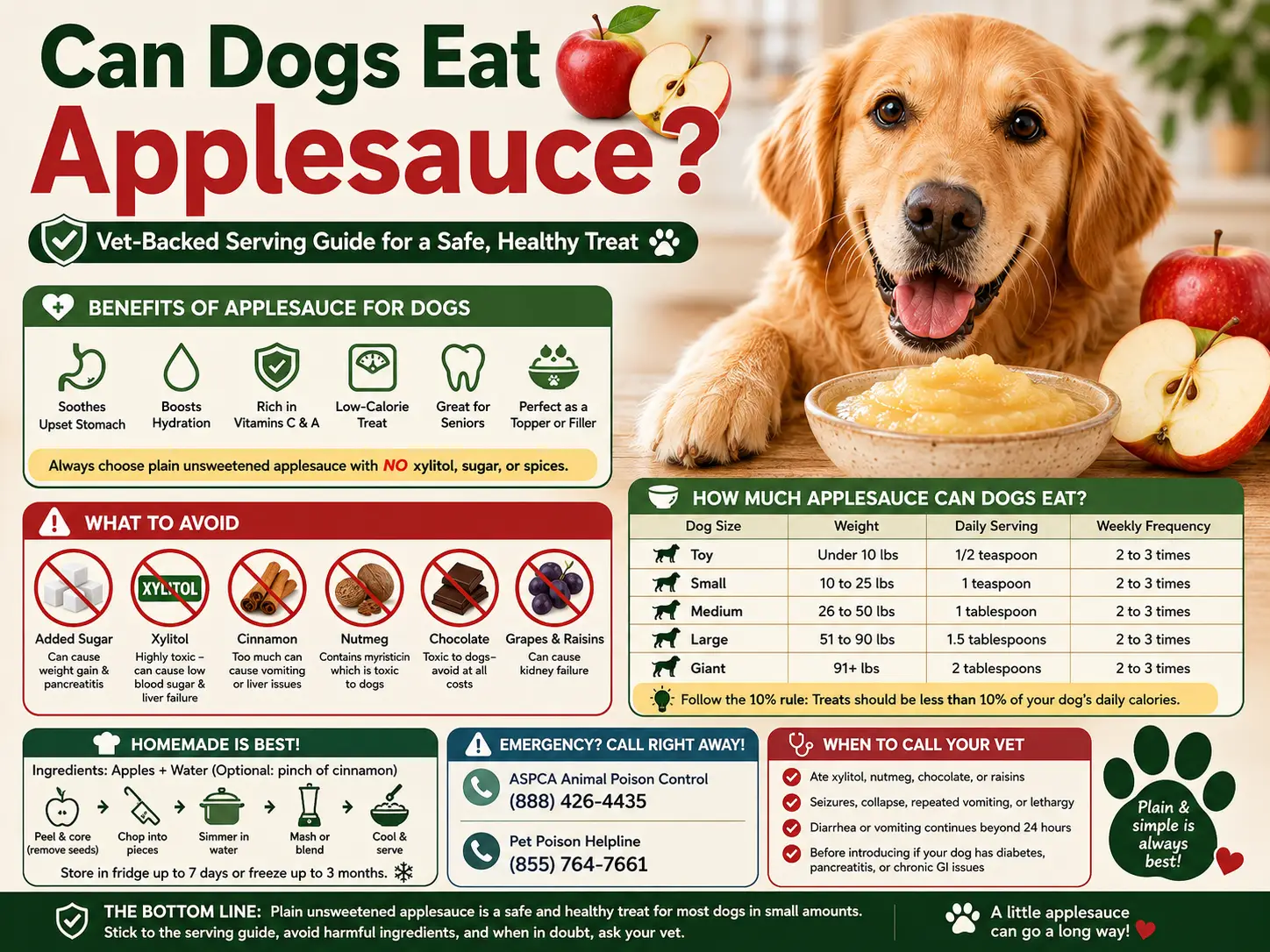
Apples are a crunchy, low-calorie snack that dogs tend to love. They provide vitamin A, vitamin C, and dietary fiber. Always remove the core and seeds before serving; apple seeds contain amygdalin, a compound that releases cyanide when chewed. Slice the flesh into small pieces and serve plain.
🍌 Banana ✅ Safe
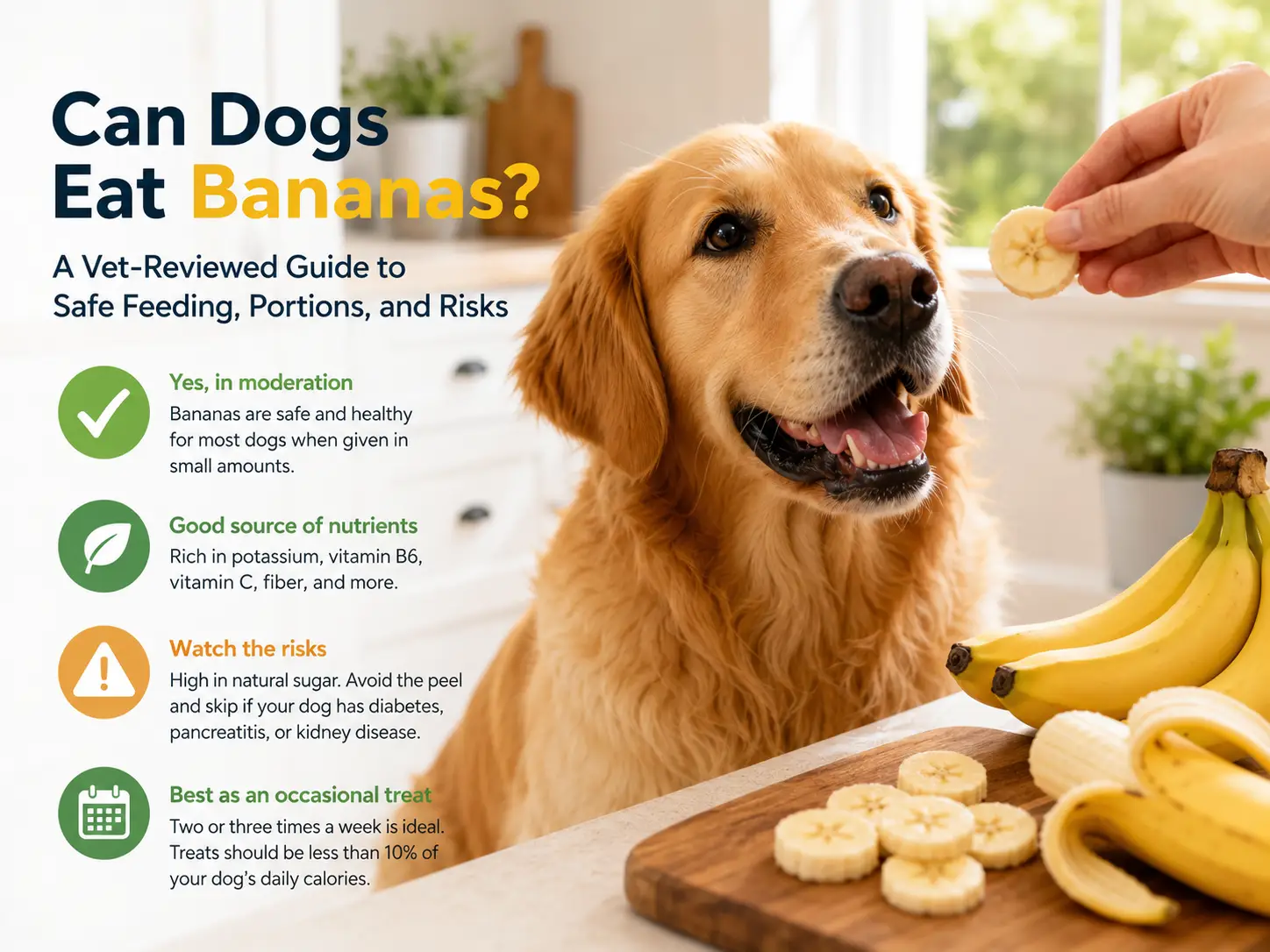
Bananas give dogs a boost of potassium, vitamin B6, and magnesium. They are higher in natural sugar than most other safe fruits, so a thin slice or two is plenty for a small dog. Never feed the peel; it is tough to digest and can cause an intestinal blockage.
🫐 Blueberries ✅ Safe
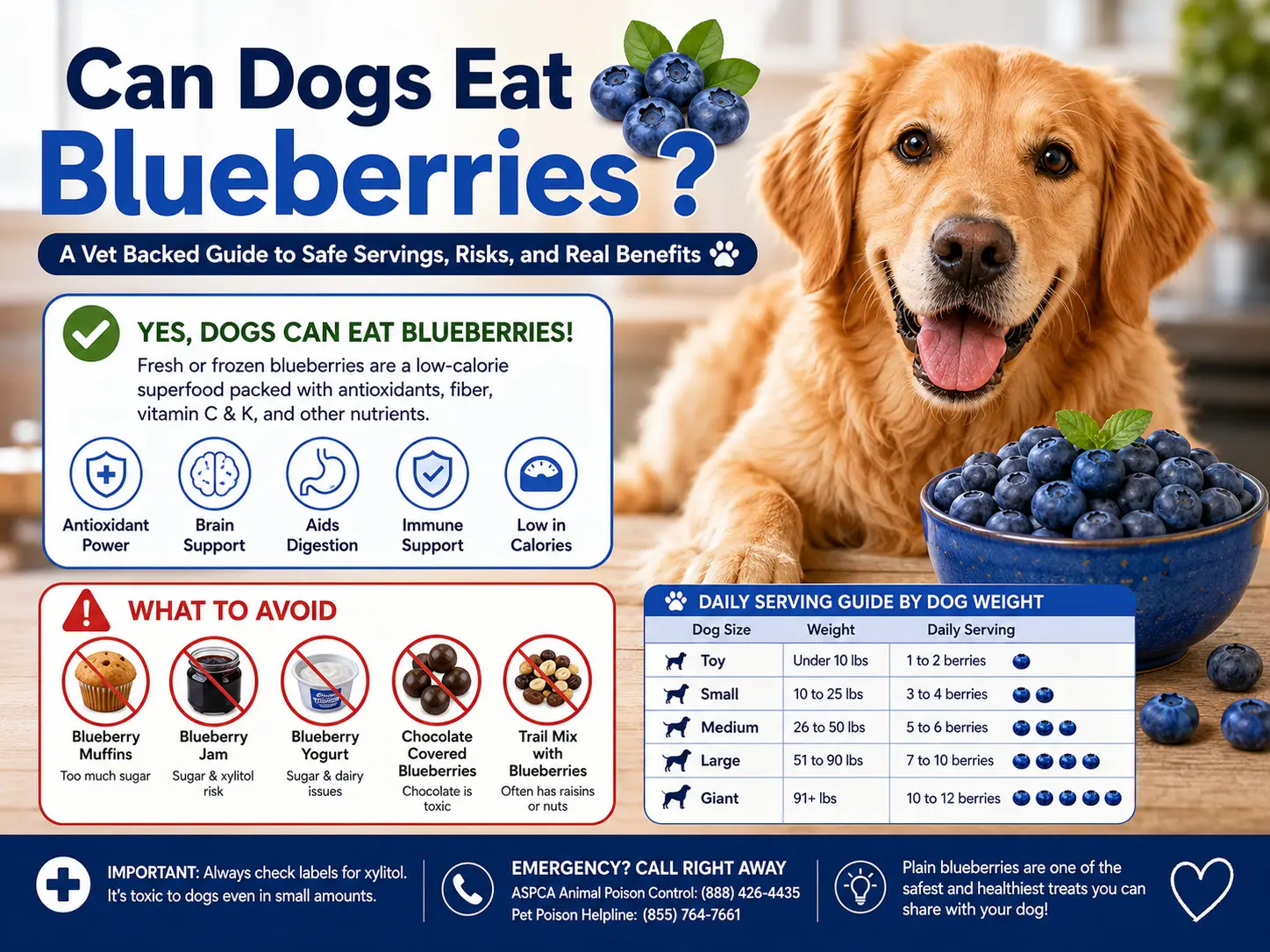
Blueberries are one of the most consistently recommended fruit treats in veterinary nutrition. They are low in calories, low in sugar, and rich in antioxidants, including anthocyanins and polyphenols. A 2025 study published in PubMed Central found that adding blueberries to a commercial dog diet positively supported oxidative balance during exercise. Three to five blueberries make a perfect serving for most dogs; just wash and serve.
🍉 Watermelon ✅ Safe
Watermelon is about 92 percent water, making it a great cooling treat on a hot summer day. It provides vitamins A, B6, and C. Remove every seed before serving; seeds cause digestive irritation, and never give the rind, which is too tough to digest and commonly causes stomach issues.
🍓 Strawberries ✅ Safe
Strawberries are a sweet, low-calorie treat that many dogs enjoy. They are high in vitamin C and contain malic acid, which may help keep teeth clean. Cut them into halves or quarters based on your dog’s size, and serve fresh, not from a can or jar, which almost always contains added sugar.
🥭 Mango ✅ Safe
Mango flesh is safe for dogs and provides vitamins A, B6, C, and E along with dietary fiber. The pit must always be removed; it is a choking hazard and contains cyanogenic compounds. The skin is also difficult for dogs to digest. Serve only the plain flesh in small cubes.
[Read Full Guide →]
🍐 Pear ✅ Safe
Pears provide fiber, vitamin C, and vitamin K. Like apples, the seeds contain amygdalin and must be removed before serving. Slice the flesh into small pieces and serve fresh. Canned pears are packed in sugar syrup and should always be avoided.
[Read Full Guide →]
🍈 Cantaloupe ✅ Safe
Cantaloupe is about 90 percent water and loaded with vitamins A and C, folate, and potassium. It is higher in sugar than some other melons, so portions should be kept small, especially for dogs that are overweight or have blood sugar issues. Remove the rind completely before serving.
[Read Full Guide →]
🍍 Pineapple ✅ Safe
Fresh pineapple is safe for dogs in small amounts. It contains vitamin C, manganese, and bromelain, a natural enzyme that supports digestion. The tough outer skin and hard core should always be removed. Canned pineapple packed in syrup is off the table.
[Read Full Guide →]
🍑 Peach ✅ Safe
Fresh peach flesh is safe for dogs and provides vitamins A and C, plus fiber. The pit is the biggest concern; it contains cyanide compounds and is a serious choking and intestinal obstruction risk. Remove the pit completely, slice the flesh, and serve in small amounts. Never give canned peaches, which are high in added sugar.
[Read Full Guide →]
🥝 Kiwi ✅ Safe
Kiwi is packed with vitamin C, vitamin K, and dietary fiber. The flesh is safe for dogs. The skin is not toxic but is tough to digest, so peel it first. Slice into small pieces appropriate for your dog’s size.
[Read Full Guide →]
🍈 Papaya ✅ Safe
Papaya contains a natural enzyme called papain that supports protein digestion, which makes it a gentle, gut-friendly treat for dogs with sensitive stomachs. It provides vitamin C, vitamin A, and folate. Remove the seeds and skin before serving. The seeds are not toxic in small amounts but can cause digestive irritation.
[Read Full Guide →]
🍊 Orange ⚠ Feed With Caution
The flesh of an orange is not toxic to dogs, but the high citric acid content causes stomach upset in some dogs. The peel and seeds should never be given; citrus peel contains psoralen compounds that can cause problems in larger amounts. If your dog tolerates it, one or two small segments occasionally are fine.
[Read Full Guide →]
🥥 Coconut ⚠ Feed With Caution
The flesh and coconut oil are not toxic to dogs, but coconut is high in fat, which can contribute to weight gain and may trigger pancreatitis in dogs prone to that condition. Small amounts occasionally are generally fine for healthy dogs. Coconut water is high in potassium; too much can upset electrolyte balance.
[Read Full Guide →]
🫐 Raspberries ⚠ Feed With Caution
Raspberries are low in sugar and calories and high in fiber and antioxidants. However, they contain trace amounts of naturally occurring xylitol, the same compound that makes sugar-free gum dangerous. The amount in raspberries is very small, and a dog would have to eat a very large quantity to be harmed, but a few berries as an occasional treat is the right limit.
[Read Full Guide →]
🫐 Blackberries ⚠ Feed With Caution
Blackberries are rich in antioxidants, vitamins C and K, and dietary fiber. Like raspberries, they contain naturally occurring xylitol in trace amounts. A small handful as an occasional treat is appropriate for most healthy dogs.
[Read Full Guide →]
🍒 Cranberries ⚠ Feed With Caution
Plain, fresh cranberries are safe in small amounts and may support urinary tract health. They are quite tart, and many dogs refuse them. Dried cranberries often contain added sugar. Cranberry sauce and juice contain far too much sugar to be appropriate for dogs.
[Read Full Guide →]
🍇 Grapes ❌ Toxic, Never Feed
Grapes and all grape-derived products, including raisins, currants, and sultanas, are among the most dangerous foods for dogs. A 2022 study published in the Journal of Veterinary Emergency and Critical Care identified tartaric acid as the likely toxic component, explaining why dogs are uniquely sensitive to grapes compared to other species. Kidney failure can develop within 24 to 72 hours. There is no established safe dose; even one grape can trigger a reaction in some dogs. If your dog eats a grape or raisin of any kind, this is a medical emergency. Call your vet or the ASPCA Animal Poison Control Center at (888) 426-4435 immediately.
[Read Full Guide →]
🥑 Avocado ❌ Toxic — Never Feed
All parts of the avocado plant, the fruit, skin, pit, leaves, and bark, contain persin, a fungicidal toxin. Persin causes vomiting, diarrhea, and heart muscle damage in dogs. The pit is also a serious choking hazard. No amount of avocado is considered safe for dogs. Keep the whole fruit, peel, and any avocado product completely out of reach.
[Read Full Guide →]
🍒 Cherry ❌ Toxic, Never Feed
Cherry pits, stems, and leaves contain amygdalin, a compound that releases hydrogen cyanide when chewed or digested. Even a small number of pits can cause cyanide toxicity. The flesh alone is technically not toxic, but it is nearly impossible to serve cherry flesh without risk of pit contact, which is why veterinarians recommend avoiding cherries altogether.
[Read Full Guide →]
🍋 Lemon ❌ Toxic, Never Feed
Lemons, limes, and grapefruit contain high concentrations of citric acid and psoralen compounds. These cause significant digestive upset in small amounts and can cause nervous system problems in larger quantities. The peel and seeds are especially concentrated. None of these citrus fruits are appropriate for dogs.
[Read Full Guide →]
Are Fruits Good for Dogs?
Fruit is not a required part of a dog’s diet. A complete, balanced commercial dog food covers every nutrient your dog needs. But many fruits provide real extras, vitamins, antioxidants, fiber, and hydration that make them worthwhile as occasional treats for healthy dogs.
A 2022 peer-reviewed study in the Journal of Animal Physiology and Animal Nutrition reviewed the evidence on plant-based ingredients in canine diets and found that phytonutrients from fruits, including carotenoids and polyphenols, support immune function, digestive health, and cardiovascular health in dogs. Research published in PubMed Central in 2025 found that adding blueberries to a commercial dog diet improved oxidative balance in exercising dogs. These benefits are real, but they come from appropriate portions of the right fruits, not from loading up your dog’s bowl.
What Fruits Provide:
| Nutrient | Benefit for Dogs | Best Fruit Sources |
|---|---|---|
| Vitamin A | Eye health, immune function, healthy skin and coat | Watermelon, Cantaloupe, Mango |
| Vitamin C | Immune support, helps reduce inflammation | Blueberries, Strawberries, Kiwi |
| Vitamin B6 | Brain function, hormone regulation, healthy red blood cells | Banana, Mango |
| Potassium | Heart health, muscle function, nerve signaling | Banana, Watermelon, Mango |
| Dietary Fiber | Digestive regularity, weight management, stable blood sugar | Apple, Pear, Raspberry |
| Antioxidants | Protects cells from damage, supports healthy aging | Blueberries, Blackberries, Strawberries |
| Phytonutrients | Immune support, joint mobility, heart health | Blueberries, Watermelon, Papaya |
| Water Content | Hydration, especially important in warm weather | Watermelon (92%), Cantaloupe (90%) |
The Sugar Side of the Equation
The same natural sugars that make fruit appealing also mean portion control matters. Too much fruit adds excess fructose and calories, which can lead to weight gain, loose stools, and blood sugar spikes over time. Fruits on the higher end of the sugar scale, bananas, mangoes, and figs, should be offered less often than lower-sugar picks like blueberries, raspberries, and watermelon. For dogs already dealing with weight issues or blood sugar problems, even a modest fruit portion is worth a conversation with your vet first.
How Much Is Enough?
The UC Davis School of Veterinary Medicine states clearly that treats and extras should not exceed 10 percent of a dog’s daily calorie intake, with 90 percent or more coming from a complete, balanced diet. A 30-pound dog eating around 800 calories a day has a treat allowance of roughly 80 calories total. One cup of watermelon chunks comes in at around 46 calories. A half cup of blueberries is about 42 calories. Start small, rotate fruits, and keep the portion in check.
SAFETY TIPS
Before Giving Your Dog Any Fruit
Follow these steps every time, with every fruit.
✔ Wash the fruit thoroughly before cutting ✔ Remove all seeds, even small ones in soft fruits ✔ Remove all pits from stone fruits like peaches, plums, and cherries ✔ Peel off any tough skin, rind, or outer layer ✔ Remove stems and leaves from all fruits ✔ Cut into small, bite-sized pieces to prevent choking ✔ Serve plain with no added sugar, syrup, honey, salt, or seasoning ✔ Choose fresh or plain frozen fruit, never canned ✔ Skip dried fruit entirely, it is too high in concentrated sugar, and raisins are toxic ✔ Introduce any new fruit slowly, offer one small piece and wait 24 hours before giving more ✔ Watch for vomiting, diarrhea, itching, or changes in behavior after a new fruit ✔ Keep all fruit portions within your dog’s daily treat allowance
Frequently Asked Questions
Can dogs eat fruit every day?
Healthy dogs can have small amounts of safe fruit daily, as long as the total treat intake stays within 10 percent of daily calories. The UC Davis School of Veterinary Medicine confirms this guideline. Rotating different fruits and keeping pieces small prevents sugar from building up and keeps things interesting for your dog too.
Which fruit is the healthiest for dogs?
Blueberries are the most widely recommended fruit treat among veterinary nutritionists. They are low in sugar, low in calories, high in antioxidants and vitamin C, soft enough to pose no choking risk for most dogs, and require nothing more than a rinse before serving. A 2025 study published in PubMed Central confirmed that blueberries supported oxidative balance in dogs during exercise.
Which fruits are toxic to dogs?
Grapes, raisins, currants, and sultanas top the list; they can cause sudden kidney failure even in very small amounts, and there is no established safe dose for any dog. A 2022 study in the Journal of Veterinary Emergency and Critical Care identified tartaric acid as the likely toxic compound. Avocado contains persin, which causes vomiting, diarrhea, and heart muscle damage. Cherries, including their pits, stems, and leaves, contain cyanide-releasing compounds. Citrus fruits like lemon, lime, and grapefruit cause digestive upset and nervous system issues in larger quantities.
Can puppies eat fruit?
Yes, in very small amounts and one fruit at a time. Puppies have developing digestive systems that are more sensitive than those of adult dogs. Offer a single small piece, wait 24 hours, and watch for any reaction before trying more. Stick to the safest, softest options like blueberries or watermelon chunks with no rind or seeds.
Can diabetic dogs eat fruit?
Only with guidance from your vet. Even safe fruits contain natural sugars that can affect blood glucose levels in dogs with diabetes. If your dog is diabetic, do not add fruit to the diet without speaking with your veterinarian first. If a vet does clear fruit as an occasional treat, lower-sugar options like blueberries and raspberries are generally a better fit than high-sugar choices like bananas or mangoes.
What should I do if my dog eats a toxic fruit?
Do not wait for symptoms to appear. Call your veterinarian immediately, or contact the ASPCA Animal Poison Control Center at (888) 426-4435 or the Pet Poison Helpline at (855) 764-7661. Have the name of the fruit, your best estimate of how much your dog ate, and your dog’s weight ready when you call. With grape and raisin ingestion especially, treatment started within four hours is significantly more effective than waiting.
Is canned or dried fruit safe for dogs?
Canned fruit is almost always packed in sugar syrup and should be avoided. Dried fruit is concentrated in sugar and, in the case of raisins, extremely toxic to dogs. Always choose fresh fruit or plain frozen fruit with no added ingredients.
Browse More Foods for Dogs
H2: Browse More Foods for Dogs
Not looking for fruit? Check out these guides.
🥦 Vegetables → 🍗 Meat and Fish → 🧀 Dairy → 🌾 Grains → 🥜 Nuts and Seeds → 🦴 Snacks and Other Foods →
Sources and References
Every claim on this page is supported by veterinary guidance or peer-reviewed research. Our full sourcing policy is available on the Review Process page.
- UC Davis School of Veterinary Medicine. Treat Guidelines for Dogs. healthtopics.vetmed.ucdavis.edu
- Tanprasertsuk J, Tate DE, Shmalberg J. Roles of plant-based ingredients and phytonutrients in canine nutrition and health. Journal of Animal Physiology and Animal Nutrition. 2022; https://doi.org/10.1111/jpn.13626
- Wegenast C, Meadows I, Anderson R, Southard T. Acute kidney injury in dogs following ingestion of cream of tartar and tamarinds and the connection to tartaric acid as the proposed toxic principle in grapes and raisins. Journal of Veterinary Emergency and Critical Care. 2022;32(6):812-816. doi:10.1111/vec.13234
- Effects of Blueberry Consumption on Preference, Digestibility, and Oxidative Balance in Dogs. PubMed Central (PMC12108248). Published May 2025.
- Merck Veterinary Manual. Food Hazards in Animals. merckvetmanual.com
- ASPCA Animal Poison Control Center. People Foods to Avoid Feeding Your Pets. aspca.org
- U.S. Food and Drug Administration. Paws Off Xylitol, It’s Dangerous for Dogs. fda.gov
- VCA Animal Hospitals. General Feeding Guidelines for Dogs. vcahospitals.com
Written by Dr. Lorenzo Bertelli, DVM | Reviewed by Dr. Bradley Pierson, DVM | Published: July 03, 2026
This page provides general educational information and does not replace professional veterinary care. Always consult your veterinarian about your dog’s specific diet and health needs. In any emergency, contact your vet or a pet poison hotline immediately.