What Human Foods Can Dogs Eat? Benefits & Risks By Vets
Your dog watches every bite you take, and you wonder if a taste would help or hurt. Some everyday foods are safe and even good for dogs. Others, like chocolate and grapes, can poison a dog fast. Every answer on this site is written by a licensed veterinarian and checked by a second vet, so you get facts you can rely on. Search for any food below to see if it is safe, risky, or off-limits.
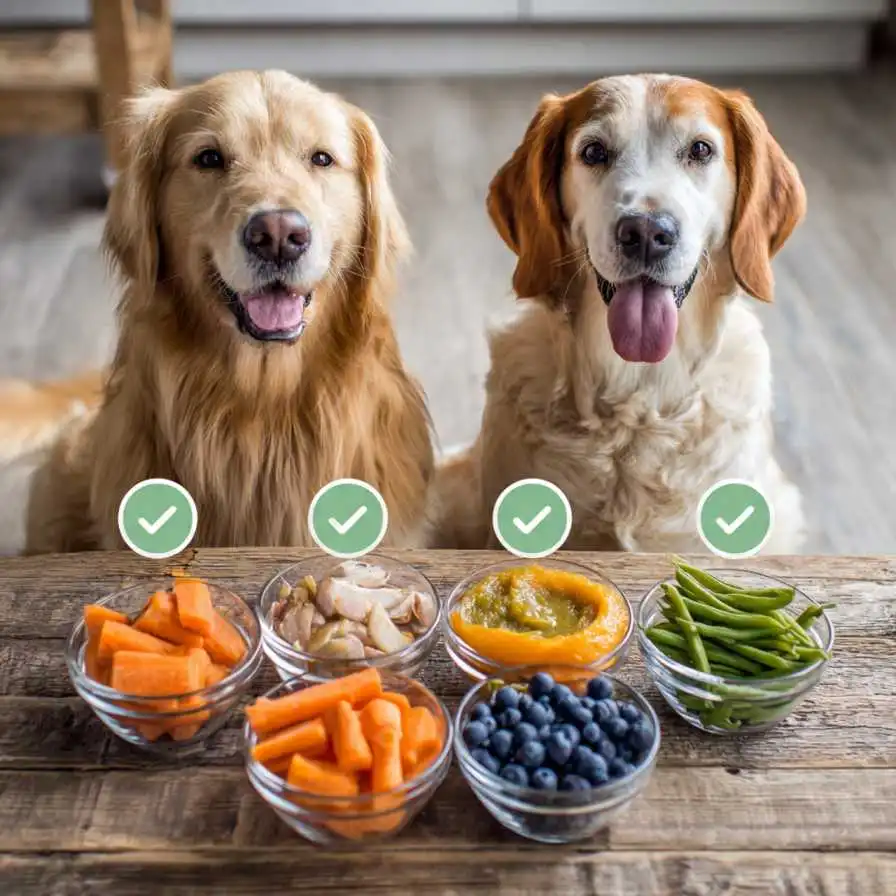
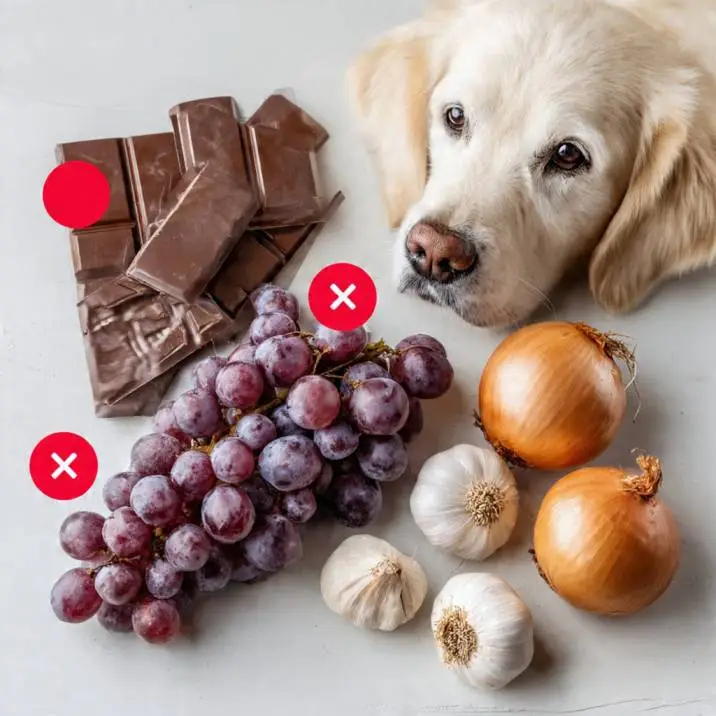
Dogs can safely eat many human foods, such as plain cooked chicken, carrots, apples, blueberries, and pumpkin, when you serve small amounts. Some foods are toxic and should never be given, including chocolate, grapes, raisins, onions, garlic, and anything with xylitol. Not sure about a food your dog got into? Check it here first, then call your vet.
Safe in moderation: chicken, carrots, apples, blueberries, pumpkin, green beans, plain rice, plain yogurt, peanut butter (no xylitol)
Never feed: chocolate, grapes, raisins, onions, garlic, xylitol, macadamia nuts, alcohol, caffeine.
Your Dog Ate Something Toxic. What Now?
Act fast. Do not wait for symptoms, and do not try to make your dog throw up unless a vet tells you to. Call one of these now:
- Your veterinarian or the nearest emergency vet
- ASPCA Animal Poison Control Center: (888) 426.4435
- Pet Poison Helpline: (855) 764.7661
Have the food name, how much your dog ate, and your dog’s weight ready. Quick treatment saves lives.

Browse Foods by Category
Fruits
Explore Fruits →Vegetables
Explore Vegetables →Latest Articles
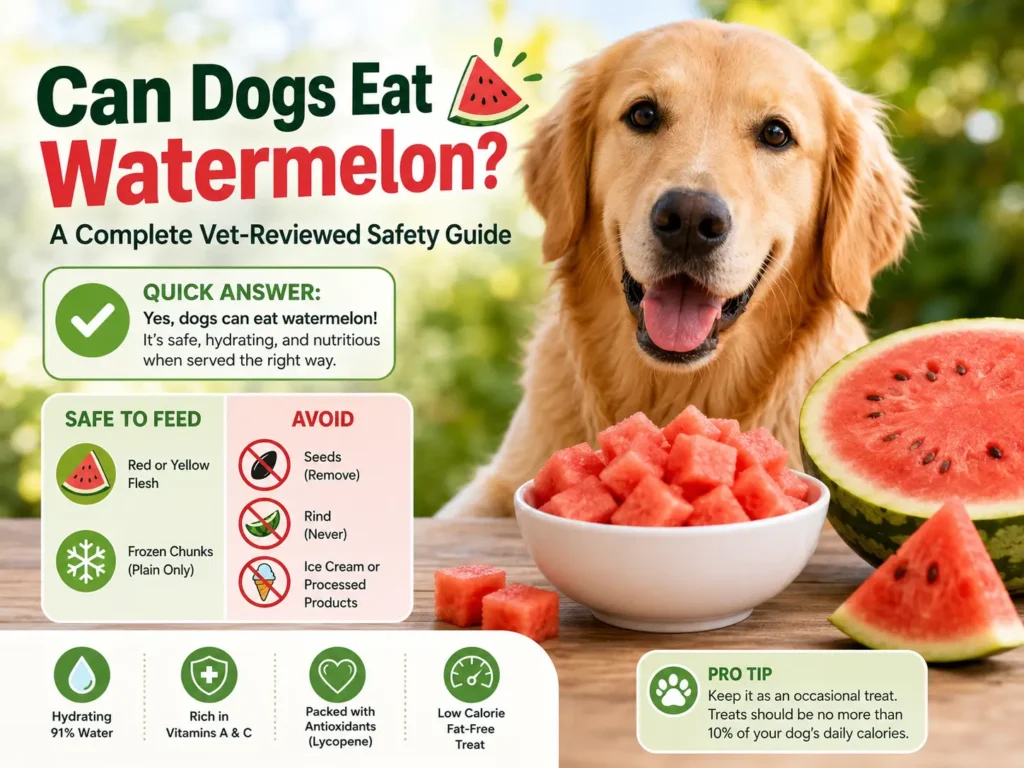
Can Dogs Eat Watermelon?
Your dog spotted your watermelon slice, and you are wondering if it is okay to share. Yes, dogs can eat watermelon …. Read more
Foods Dogs Can Eat (Safe Human Foods)
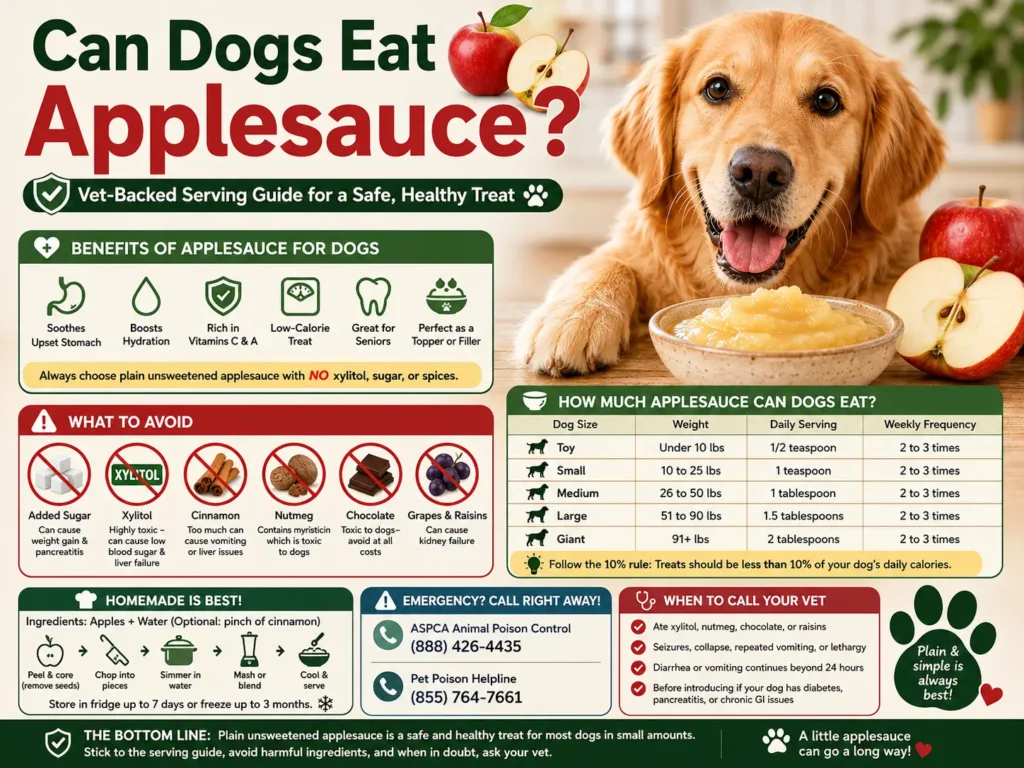
Plenty of fresh foods make healthy, low-calorie treats. Serve them plain, with no salt, butter, sugar, or seasoning. Cut food into small pieces so your dog does not choke, and add anything new slowly so you can watch for an upset stomach. Veterinary nutritionists at the UC Davis School of Veterinary Medicine note that fruits and vegetables work well as treats because they are usually low in fat, sodium, and protein.
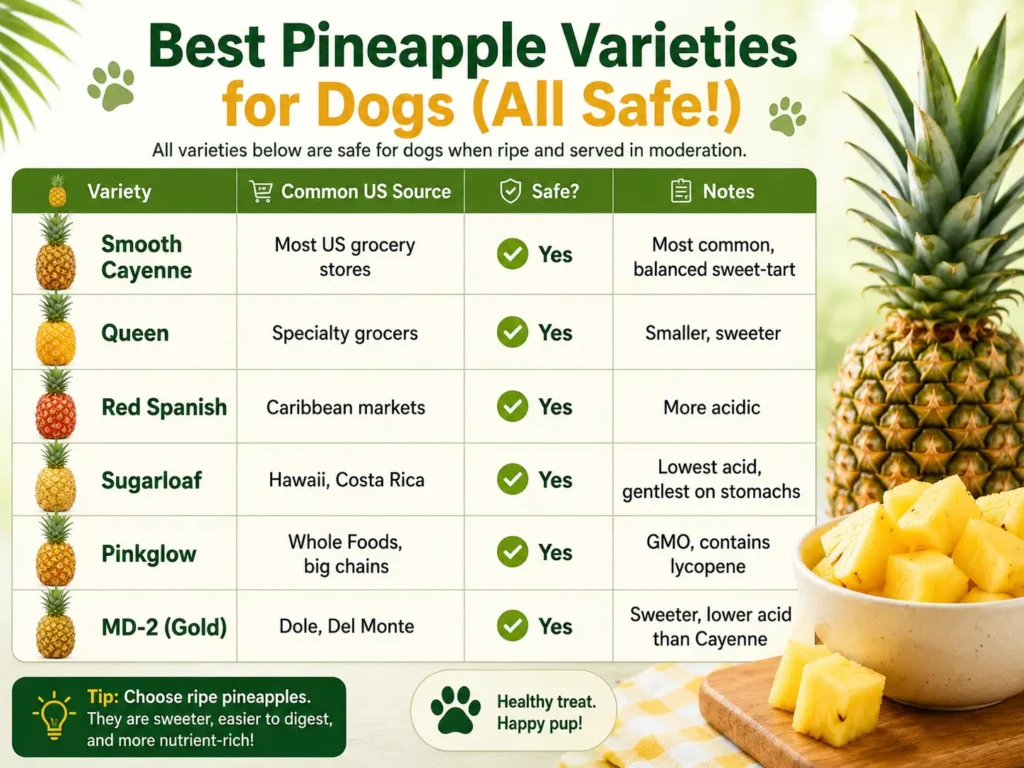
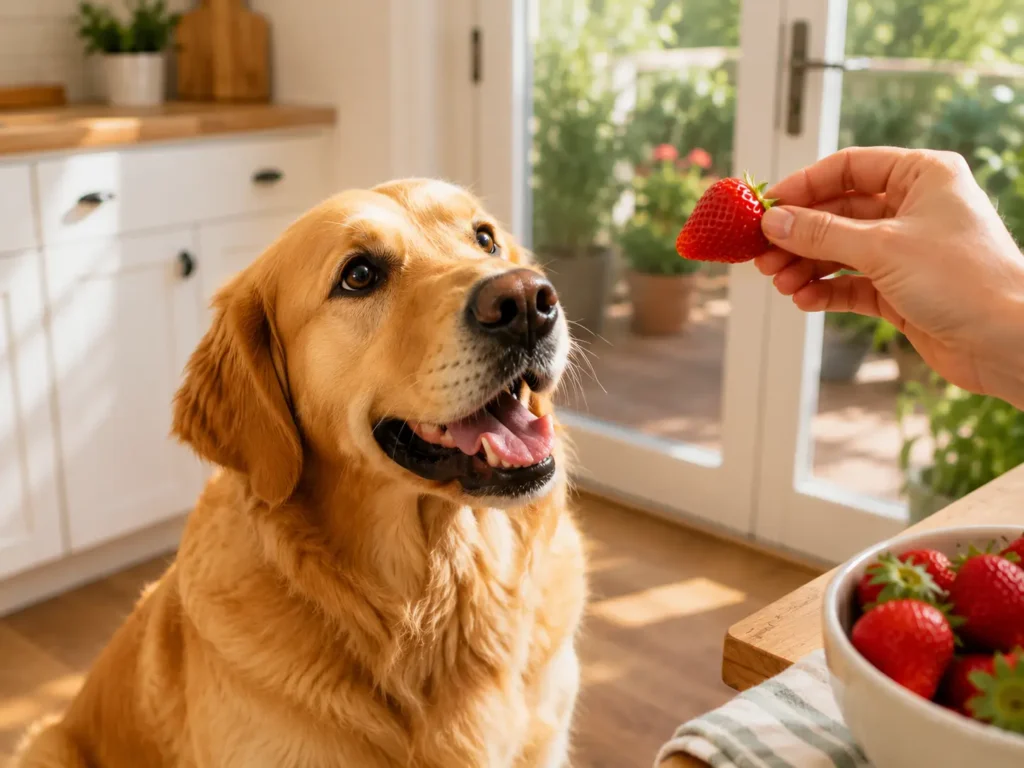
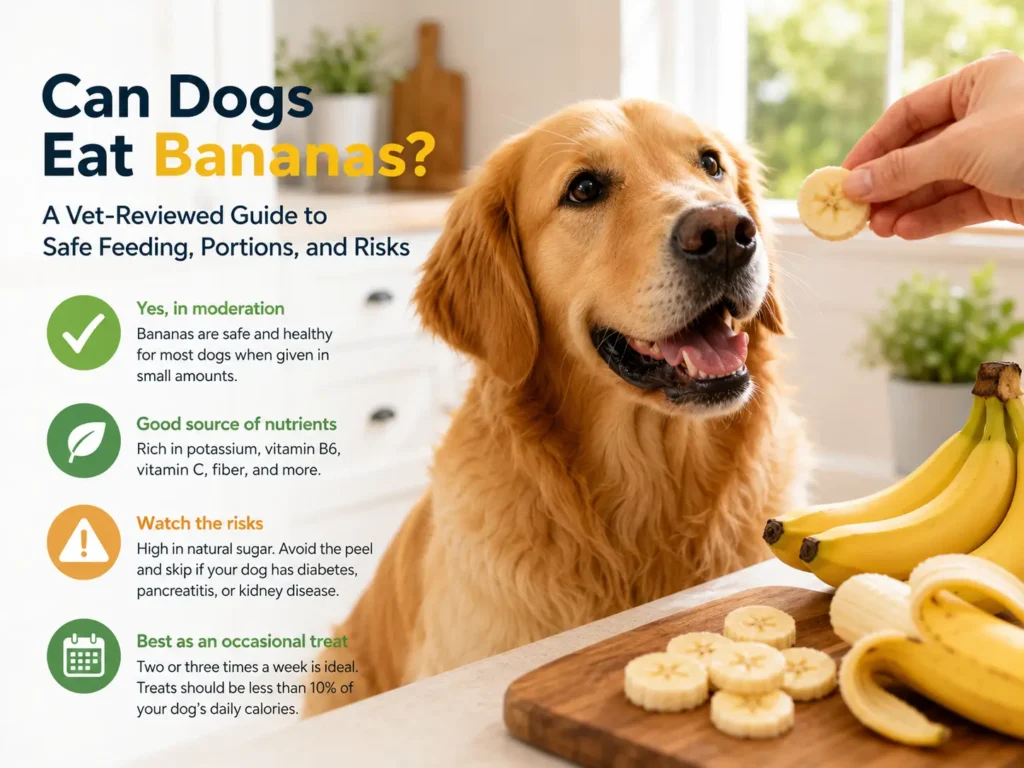
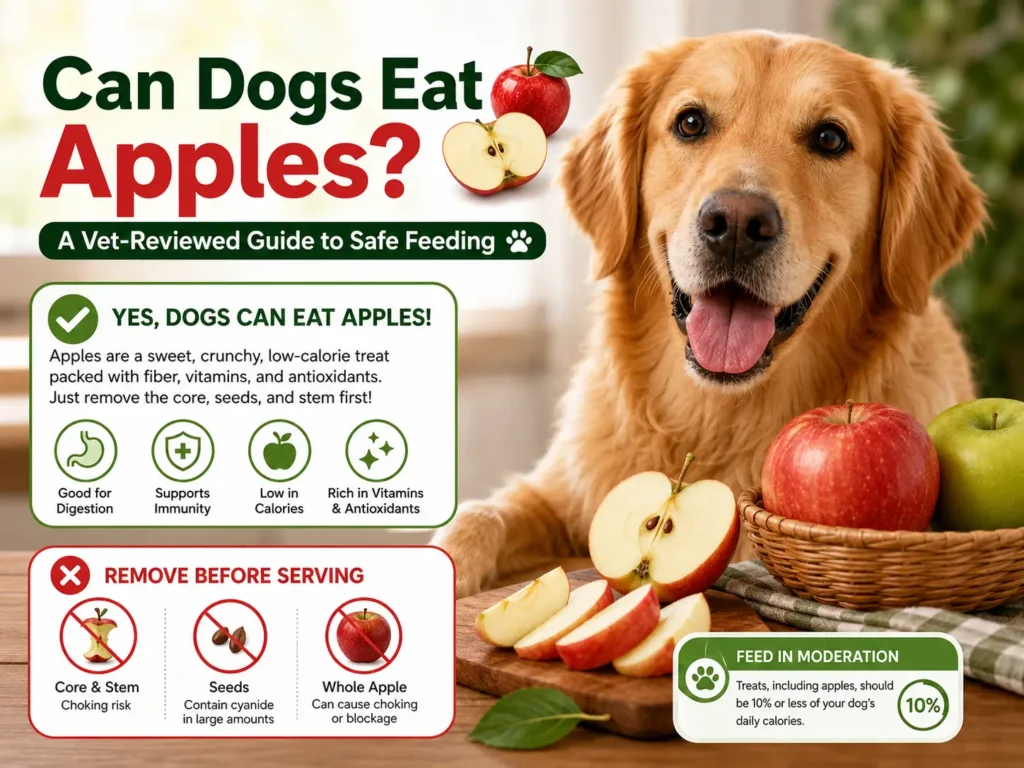
Fruits: apple (no seeds or core), banana, blueberries, strawberries, watermelon (no rind or seeds), cantaloupe, pineapple
Vegetables: carrots, green beans, pumpkin (plain, cooked), sweet potato, cucumber, peas, broccoli (small amounts)
Protein: cooked chicken, cooked turkey, cooked beef, cooked salmon, cooked eggs
Other: plain white rice, plain pasta, plain yogurt, peanut butter (check the label for xylitol first)
Foods Dogs Can’t Eat (Toxic and Poisonous)
A few common foods cause real harm, and some are deadly even in small amounts. If your dog eats any of these, call your vet or a pet poison hotline right away.
🔴 Chocolate. Chocolate holds theobromine and caffeine, two stimulants that a dog’s body clears very slowly. The Merck Veterinary Manual reports that about one ounce of milk chocolate per pound of body weight can be deadly, and darker chocolate is far more dangerous. Watch for vomiting, a racing heart, and seizures.
🔴 Grapes and Raisins. Even a small handful can trigger sudden kidney failure. The Merck Veterinary Manual notes that more than one grape or raisin per ten pounds of body weight may be enough to harm a dog’s kidneys.
🔴 Onions, Garlic, Chives, and Leeks. These belong to the Allium family. They damage red blood cells and can cause a type of anemia called Heinz body anemia. The Merck Veterinary Manual reports that garlic is several times stronger than onion. Powders and cooked forms count too.
🔴 Xylitol. This sugar substitute hides in sugar-free gum, candy, some peanut butters, and baked goods. The U.S. Food and Drug Administration warns that in dogs, it causes a fast insulin release, which drops blood sugar within minutes and can lead to seizures and liver failure.
🔴 Macadamia Nuts. These cause weakness, shaking, vomiting, and fever, often within twelve hours.
🔴 Alcohol and Raw Bread Dough. Both can poison a dog. Rising dough also makes alcohol inside the stomach, and can swell to a dangerous size.
🔴 Caffeine. Coffee, tea, and energy drinks act like the toxins in chocolate and speed up the heart.
How Much Human Food Is Safe?
A safe treat amount is smaller than most people think. The UC Davis School of Veterinary Medicine advises that treats and extras stay at or below 10% of your dog’s daily calories. The other 90% should come from a complete, balanced dog food. Too much rich human food can upset the stomach or lead to pancreatitis, a painful swelling of the pancreas. Smaller is always safer.
Why Trust Us
Every food guide here follows the same process:
- A licensed veterinarian with a DVM degree writes it.
- A second veterinarian reviews it for accuracy before it goes live.
- We back our advice with sources like the Merck Veterinary Manual, the U.S. Food and Drug Administration, and accredited veterinary schools.
- We update guides as veterinary guidance changes.
You can read each vet’s name, degree, and background on their author page.
About Us
whatdogscaneat.com is a free resource built around one question: which foods are safe for dogs and which are not. We cover hundreds of everyday human foods, from fruits and vegetables to meat, dairy, and snacks. Our goal is simple: clear answers that help you keep your dog healthy.
Can Dogs Eat Watermelon?
Common Questions:
What human foods are safe for dogs?
Safe options include plain cooked chicken, carrots, apples without seeds, blueberries, green beans, and plain pumpkin, all in small amounts. Serve them with no salt, sugar, or seasoning.
What foods are most toxic to dogs?
Chocolate, grapes, raisins, onions, garlic, xylitol, and macadamia nuts are among the most dangerous. Some can cause kidney failure, liver failure, or anemia even in small amounts.
Can dogs eat human food every day?
Only in small amounts. The UC Davis School of Veterinary Medicine advises keeping treats and extras at or below 10% of daily calories, with the rest from balanced dog food.
What should I do if my dog eats something toxic?
Call your vet, the ASPCA Animal Poison Control Center at (888) 426.4435, or the Pet Poison Helpline at (855) 764.7661 right away. Do not wait for symptoms.
Why is chocolate bad for dogs?
Chocolate contains theobromine and caffeine, which dogs process slowly. Darker chocolate has more of these toxins and is the most dangerous.
Is peanut butter safe for dogs?
Plain peanut butter is usually fine in small amounts, but read the label first. Some brands contain xylitol, which is toxic to dogs.