Can Dogs Eat Tomatoes? Vet-Backed Safety Guide, Servings, and Plant Risks

By Dr. Bradley Pierson, DVM. Reviewed By Dr. Grace Mullen, DVM
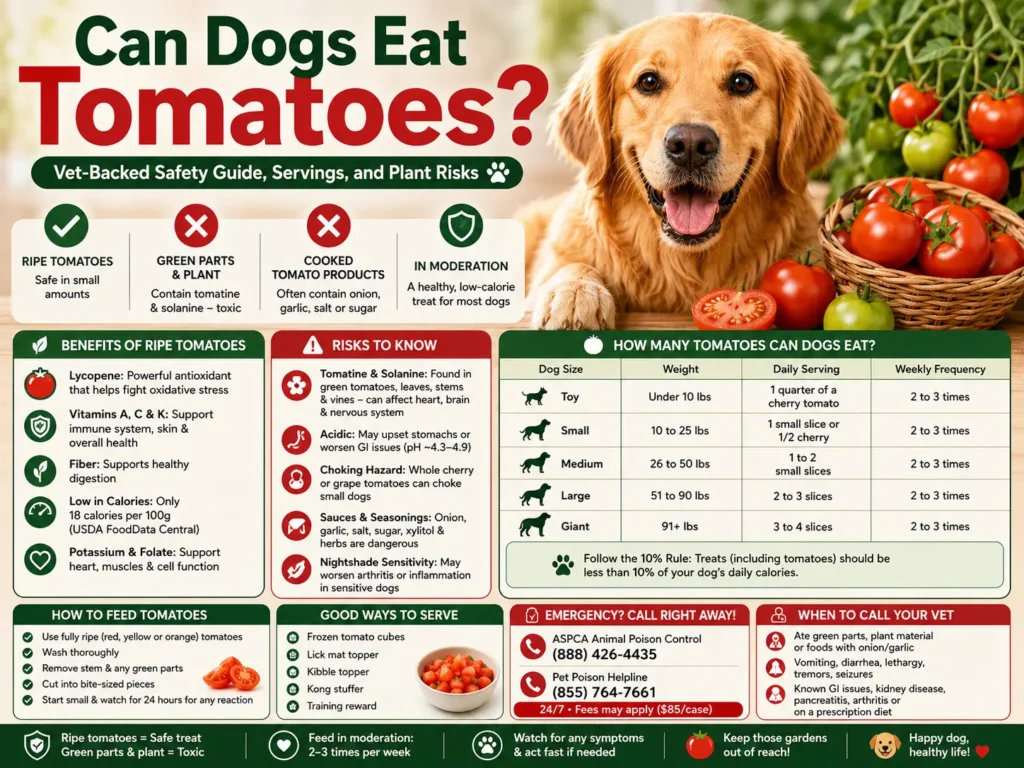
Yes, dogs can eat ripe red tomatoes in small amounts. The catch is everything else on the plant. Green tomatoes, leaves, stems, and vines contain natural toxins that can make your dog sick. Cooked tomato products like sauce, ketchup, and soup are off limits because most contain onion, garlic, salt, or sugar. Stick to a couple of small ripe pieces a few times a week.
Are Tomatoes Good for Dogs?
Yes, ripe tomatoes are safe and bring real nutrition when fed plain. The ASPCA does not list ripe tomato fruit as toxic for dogs. Tomatoes are part of the nightshade family (Solanaceae), along with potatoes, bell peppers, and eggplant. The real danger is the green parts of the plant and anything cooked with toxic add-ins like onion or garlic. Stick to fully ripe red, yellow, or orange varieties and skip green ones.
Tomatoes also show up in many US dog foods as an ingredient called tomato pomace, which we cover later in this guide. That means your dog has probably already eaten tomatoes in some form, even if you never share a slice from your salad.
Emergency: What to Do If Your Dog Ate a Tomato Plant
One or two ripe tomatoes: No emergency. Watch for mild gas or loose stool over 24 hours. Offer fresh water and skip their next treat to keep total calories in check.
Green tomatoes, leaves, stems, or vines: Note how much your dog ate and which part. Take a photo of the plant if you can. Call right away:
- ASPCA Animal Poison Control: (888) 426-4435
- Pet Poison Helpline: (855) 764-7661
Both lines are 24/7. Pet Poison Helpline charges about $85 per case, but most pet insurance plans reimburse the fee. The agent will ask about your dog’s weight, the time of ingestion, and any symptoms.
Tomato sauce, ketchup, salsa, or pizza: Risk depends on the recipe. Onion, garlic, and xylitol are the real dangers, not the tomato itself. Read [our guide to onion and garlic toxicity in dogs] for symptoms and timelines. Call your vet if any of these were in the dish or your dog shows symptoms.
Save both poison control numbers in your phone today. Garden raids almost always happen at the worst possible time.
What Is Tomatine Poisoning?
Tomatine and solanine are glycoalkaloids, natural plant defenses concentrated in green leaves, stems, vines, flowers, and unripe fruit. As tomatoes ripen and turn red, these compounds drop sharply. A fully ripe red tomato has about 0.4 mg of tomatine per gram, while a green tomato can have up to 50 mg per gram. That is roughly 125 times more toxin in the green fruit. Severe poisoning is uncommon, but toy breeds and puppies are at higher risk because they weigh less.
Symptoms of Tomatine Poisoning
- Loss of coordination
- Loss of appetite
- Muscle weakness or tremors
- Excess drooling
- Dilated pupils
- Lethargy or seeming “off”
- Vomiting and diarrhea
- Abdominal pain
- Irregular heartbeat
- Seizures in serious cases
Symptoms usually appear within a few hours but can take up to 24 hours to show. If you suspect your dog ate any green tomato material, do not wait for symptoms to start.
How Tomato Poisoning Is Treated
Per the Merck Veterinary Manual, your vet will do a physical exam, blood work, and an ECG if heart effects show up. Treatment can include induced vomiting if the ingestion happened in the last two hours, activated charcoal to absorb remaining toxin, IV fluids to support the kidneys, and overnight monitoring. Most dogs recover fully with prompt care. Mild cases often resolve within 24 hours. Severe cases with cardiac or neurological signs may need a few days of inpatient care.
Health Benefits of Tomatoes for Dogs
Ripe tomatoes bring real nutrition in just 18 calories per 100 grams, per USDA FoodData Central.
- Lycopene. The carotenoid that makes tomatoes red. Research indexed at PubMed links lycopene to lower oxidative stress. Cooking actually raises lycopene absorption.
- Vitamins A, C, and K support vision, immune function, skin, and normal blood clotting.
- Fiber. About 1.2 grams per 100 grams supports digestion.
- Potassium and folate. Support muscle, nerve, and cell function.
- Beta carotene. Another antioxidant that converts to vitamin A in the body.
- Low calorie. A clean swap for higher-calorie store treats.
For most healthy dogs, these benefits are a small bonus, not a reason to add tomatoes regularly. A complete and balanced dog food already covers daily needs. Tomatoes work best as an occasional treat with mild nutritional upside.
Risks of Tomatoes for Dogs
Tomatine and Solanine in Green Parts
The biggest risk by far. Large doses affect the heart, brain, nervous system, and muscles. The danger drops as the fruit ripens, but the rest of the plant stays toxic at every stage.
Acidic Stomach Upset
Tomatoes have a pH of about 4.3 to 4.9, making them more acidic than most fruits dogs eat. Per VCA Animal Hospitals, dogs with gastroenteritis, acid reflux, or IBD should skip tomatoes. Even healthy dogs can get loose stools if they eat too many at once.
Choking Hazard for Small Breeds
Whole cherries and grape tomatoes can choke toy breeds and brachycephalic dogs like Pugs or French Bulldogs. Cut into quarters for dogs under 25 pounds. The slippery texture is also a problem for dogs that gulp food without chewing.
Pesticide Residue
The EWG Clean 15 lists tomatoes as one of the fruits with the lowest pesticide load. Wash before serving anyway. Organic costs a little more but is worth it for dogs with food sensitivities.
Allergic Reactions
Rare but possible. Watch for hives, facial swelling, coughing, wheezing, or trouble breathing. Stop feeding and call your vet. True tomato allergies are uncommon in dogs, but cross-reactivity with other nightshades sometimes shows up.
Nightshade Sensitivity
Some dogs with arthritis or chronic inflammation react poorly to nightshades. The alkaloids in nightshade plants may worsen joint pain in sensitive dogs, though the research in dogs is limited. If your dog has osteoarthritis or autoimmune joint disease, ask your vet before adding tomatoes.
Fresh Tomatoes: Raw, Cooked, and Green
Raw tomatoes are fine when fully ripe and plain. Wash, remove the stem and any green parts, and cut into small pieces. Raw delivers more vitamin C than cooked, since heat breaks down vitamin C.
Cooked tomatoes are safe in small amounts. Cooking softens the texture and actually raises lycopene absorption by 2 to 3 times compared to raw, according to the PubMed-indexed research above. Never add salt, butter, garlic, onion, or herbs. Plain boiled or steamed is best.
Green tomatoes are off limits. They carry the highest tomatine and solanine of any part of the fruit. Even one small green tomato can affect small breeds and puppies. If your dog ate one, call poison control.
Skip raw tomatoes if your dog has IBD, gastritis, or chronic acid reflux. Cooked is gentler on sensitive stomachs because heat lowers the acid load.
Cherry, Grape, and Other Varieties
Ripe cherry, grape, Roma, beefsteak, heirloom, and yellow tomatoes are all safe in small amounts. Cherry and grape tomatoes need the most prep because whole ones can choke small dogs. Halve them for medium breeds and quarter them for toy breeds.
Despite the name, grape tomatoes are not related to actual grapes, which are toxic to dogs. Read [our guide on why grapes are dangerous] if you want the full story on that one.
Tomato Variety Comparison
| Variety | Safe? | Notes |
|---|---|---|
| Cherry | ✅ Yes | Halve or quarter for small dogs |
| Grape | ✅ Yes | Same as cherry |
| Roma | ✅ Yes | Lower acid (pH closer to 4.6) |
| Beefsteak | ✅ Yes | Slice into bite-size pieces |
| Heirloom | ✅ Yes | Wash well |
| Yellow | ✅ Yes | Slightly less acidic |
| Green (any variety) | ❌ No | High tomatine and solanine |
| Sun dried | ⚠️ Limited | Concentrated, often salted |
| Canned plain | ⚠️ Limited | Check salt content |
| Canned seasoned | ❌ No | Onion, garlic, salt |
Yellow and orange tomatoes are slightly less acidic than red ones, which can help dogs with mild stomach sensitivity. They also contain different carotenoids (more zeta carotene, less lycopene), so the antioxidant profile shifts a bit.
Tomato Sauces, Pastes, and Soups
This whole category is mostly off limits, and the reason is rarely the tomato itself. Per the AVMA, onion and garlic damage canine red blood cells and can cause anemia. The toxic dose for garlic is about 5 grams per kilogram of body weight, which a 20-pound dog can hit from a single tablespoon of garlic-heavy sauce.
Tomato sauce and spaghetti sauce: No. Onion, garlic, salt, sugar, herbs, and sometimes wine. A small lick off a plate likely will not hurt, but a full serving warrants a vet call.
Tomato paste: Plain paste with no added salt is okay in tiny amounts, about a quarter teaspoon. Most US commercial brands include salt. Concentrated paste also packs more acid per spoonful.
Tomato soup: No. Canned and restaurant tomato soup usually contains onion, garlic, cream, and salt. Even “low sodium” versions often have garlic or onion powder.
Canned tomatoes: Only plain, no salt versions. Most US brands add 200 to 400 mg of sodium per half cup. A teaspoon mixed into food is plenty. Skip “Italian style” diced versions with garlic or basil.
Ketchup: No. Added sugar, salt (around 160 mg of sodium per tablespoon), garlic powder, onion powder, and sometimes xylitol.
Salsa: No. Same problem as sauce, plus raw onion, peppers, lime, and salt. Hot salsa is even worse because capsaicin can cause GI distress.
Pizza: No. Pizza sauce carries the same risks as spaghetti sauce, plus cheese (lactose), processed meats (high salt and fat), and sometimes onion in the toppings.
Frozen and Dried Tomatoes
Frozen tomatoes are a safe summer treat when plain and ripe. Cut into small chunks before freezing. Thaw whole frozen cherry tomatoes for a few minutes to prevent choking in small dogs. Frozen tomato cubes are also handy during teething or for older dogs that need cool relief.
Dried tomatoes are a limited option. Plain sun-dried tomatoes with no added salt are fine in tiny amounts. Most US commercial sun-dried tomatoes come packed in oil with garlic, herbs, or salt. Drying concentrates sugar by about 5 to 7 times the fresh equivalent, so a single dried tomato slice carries the sugar load of a whole fresh one. That makes them a poor pick for diabetic dogs.
If you dehydrate tomatoes at home, slice thin and dry without any seasoning. Store in a sealed container for up to two weeks.
How Often Can Dogs Have Tomatoes
Two to three small servings per week are the sweet spot for most healthy adult dogs. Treats stay under 10% of daily calories per the UC Davis School of Veterinary Medicine. Daily tomatoes are not recommended because of their acidity and natural sugar.
For working dogs, agility dogs, or active breeds that burn more calories, the 10% rule allows a bit more room. For couch dogs and seniors, scale back. Always count tomato calories toward the daily treat budget.
How to Feed Tomatoes to Dogs
Build up to the right serving for your dog’s size over a week.
Pick a fully ripe red, yellow, or orange tomato.
Wash thoroughly under cool running water for at least 30 seconds.
Remove the stem and any green parts completely.
Slice into bite-sized pieces. Quarter cherry and grape tomatoes.
Start with one small piece to test tolerance.
Wait 24 hours and watch for loose stool, vomiting, or itching.
How Many Tomatoes Can Dogs Eat? (Serving Size by Weight)
| Dog Size | Weight | Daily Serving | Weekly Frequency |
|---|---|---|---|
| Toy | Under 10 lbs | 1 quarter of a cherry tomato | 2 to 3 times |
| Small | 10 to 25 lbs | 1 small slice or 1/2 cherry | 2 to 3 times |
| Medium | 26 to 50 lbs | 1 to 2 small slices | 2 to 3 times |
| Large | 51 to 90 lbs | 2 to 3 slices | 2 to 3 times |
| Giant | 91+ lbs | 3 to 4 slices | 2 to 3 times |
Stick to the low end for first-time tomato eaters. Build up over a couple of weeks if your dog tolerates them well.
When to Avoid Tomatoes for Dogs
Skip tomatoes if your dog has:
- Active acid reflux or gastroenteritis
- Inflammatory bowel disease (IBD)
- Chronic kidney disease without vet approval
- Pancreatitis history
- A confirmed tomato or nightshade allergy
- Arthritis with nightshade sensitivity
- An active prescription diet
- Diabetes that is not well controlled
Can Puppies Eat Tomatoes?
Yes, for puppies over 8 weeks that have started solids. Their main nutrition must come from a balanced puppy formula. Start with a tiny piece, like a quarter of a cherry tomato. Smaller bodies process toxins faster, so green tomato exposure is far riskier in puppies. Watch for any reaction for 24 hours.
Frozen tomato chunks can help soothe teething gums between 4 and 6 months, but the acidity may cause loose stool for puppies under four months.
Can Senior Dogs Eat Tomatoes?
Yes, in small amounts. The lycopene may help support aging cells. Acidic foods can bother seniors with dental issues or chronic GI problems. Mash or finely chop for dogs with bad teeth. Skip tomatoes for senior dogs on prescription diets, which are formulated to specific nutritional targets that any extra food can offset.
Can Diabetic Dogs Eat Tomatoes?
With vet approval, yes. Tomatoes have a low glycemic load (about 3 grams of sugar per 100 grams) and a glycemic index of around 30. Lower risk than most fruits. Skip dried, canned with salt, and any tomato sauce. If your dog is on insulin, talk to your vet before changing the treat routine, since even small treats can affect blood glucose readings.
Why Do Dogs Love Tomatoes?
Sweet ripe tomatoes contain natural sugars (glucose and fructose) that dogs can taste. The fruity smell warmed by the sun draws them in. Garden raids during summer are common because ripe tomatoes off the vine taste sweetest. Not every dog likes them, and that is normal.
Some dogs are drawn to tomatoes because the soft texture mimics wet food. Others enjoy the chewy skin. If your dog goes wild for ripe tomatoes, treat it as a sign to fence off the garden, not an invitation to share more.
Why Will My Dog Eat Literally Anything but Not a Tomato?
Some dogs spit tomatoes right out. Dogs have about 1,700 taste buds compared to roughly 9,000 in humans, according to research published by VCA Animal Hospitals, and they are especially good at picking up bitter and sour notes. Raw tomato acidity (pH around 4.3) can taste sour to them. The seeds and skin can also feel weird in the mouth. Cooked or mashed tomato sometimes works for picky eaters.
Texture matters more than humans realize. Dogs that prefer crunchy treats often skip soft, slippery foods. Freezing tomato chunks gives a different mouthfeel that some refusers will accept.
Tomato Pomace in Commercial Dog Food
You might see “tomato pomace” near the bottom of your dog food label. It is the dried pulp, skin, and seeds left after juicing. Per AAFCO, it is approved as a safe pet food ingredient. It adds fiber and trace lycopene without the acidity of fresh fruit.
Pomace is not a red flag on a label. It is a budget-friendly fiber source common in mid-range US dog foods like some Purina ONE and Iams formulas. If your dog already eats food with tomato pomace, you do not need to add fresh tomato to their diet.
Fun Ways to Serve Tomatoes to Your Dog
Meal mix-in. Stir a teaspoon of mashed tomato into wet food for variety once a week.
Frozen tomato cubes. Blend ripe tomato with water, freeze in ice cube trays. Great for hot summer afternoons.
Lick mat topper. Mash with plain Greek yogurt onto a silicone mat. Slow down, fast eaters.
Kibble topper. Dice a tablespoon of dry food. Adds flavor for picky eaters.
Kong stuffer. Blend with cooked plain chicken and freeze inside. Long-lasting enrichment.
Garden training reward. Use small, ripe pieces during supervised outdoor training.
Healthier Alternatives to Tomatoes
| Alternative | Why It Works | Read More |
|---|---|---|
| Cucumber slices | Hydration, near zero calories, no acid | Can dogs eat cucumber? |
| Blueberries | Antioxidants, low glycemic | Can dogs eat blueberries? |
| Red bell pepper | Sweet, vitamin C-rich | Can dogs eat bell peppers? |
| Carrots | Vitamin A, supports teeth | Can dogs eat carrots? |
| Watermelon (seedless) | Hot day hydration | Can dogs eat watermelon? |
| Plain pumpkin puree | Fiber for digestion | Can dogs eat pumpkin? |
| Strawberries | Vitamin C, low calorie | Can dogs eat strawberries? |
| Apple slices (no core) | Crunch and fiber | Can dogs eat apples? |
How to Keep Dogs Out of the Tomato Garden
- Fence raised beds with at least a 24-inch barrier.
- Use elevated planters or hanging baskets for cherry and grape tomato plants.
- Train a strong “leave it” command.
- Pick up fallen fruit daily during peak season.
- Avoid mulch your dog might chew on, like cocoa mulch, which is toxic.
- Plant rosemary, basil, or lavender around the perimeter as natural deterrents.
- Supervise outdoor time during late summer when ripe fruit drops.
A motion-activated sprinkler near the garden works for repeat offenders.
When to Call Your Vet About Tomatoes
Call right away if your dog ate green tomatoes, leaves, stems, or vines; ate sauce with onion or garlic; or shows seizures, collapse, repeated vomiting, or extreme lethargy.
Call within 24 hours if diarrhea or vomiting continues, your dog refuses food, or you see tremors, weakness, or an unusual heart rate.
Call before introducing tomatoes if your dog has active GI issues, kidney disease, pancreatitis, arthritis, or is on a prescription diet.
US emergency lines:
- ASPCA Animal Poison Control: (888) 426-4435
- Pet Poison Helpline: (855) 764-7661
When you call, have these details ready: your dog’s weight, age, and breed; what was eaten and how much; when it happened; and any symptoms you have noticed.
Can dogs eat tomato leaves?
No. Leaves, stems, vines, and flowers all contain tomatine and solanine.
Can dogs eat tomato seeds?
Yes, in small amounts. Seeds are not toxic, just slightly harder to digest.
Can dogs eat tomatoes with the skin on?
Yes. Tomato skin is safe and holds most of the fiber. Wash first.
How many cherry tomatoes can a small dog eat?
Half to one whole ripe cherry tomato, cut into quarters, is plenty for dogs under 25 pounds.
Can dogs eat tomato juice?
Limited. Plain unsalted tomato juice in tiny amounts is okay. Most commercial brands add 600 mg or more of sodium per cup.
Are tomatoes safe for dogs with arthritis?
Some arthritic dogs are nightshade sensitive. Talk to your vet before regular feeding.
Can dogs eat tomato baby food?
Only if the label lists tomato and water. Skip anything with onion powder, garlic powder, or added salt.
Does anyone else’s dog eat tomatoes?
Many dogs eat ripe ones happily, especially from the garden. Just as many spit them out. Both reactions are normal.
Can dogs eat fried green tomatoes?
No. Fried green tomatoes combine the toxin issue with frying oil, salt, and breading.
Can dogs eat tomato pasta?
Plain pasta is fine, but most tomato sauces are not. Pair plain pasta with a teaspoon of unseasoned cooked tomato instead.
Can dogs eat heirloom tomatoes?
Yes, when ripe. Heirlooms often come from home gardens with fewer pesticides, which is a small plus.
Can dogs eat tomatoes from the vine?
Yes, if the fruit is fully ripe and you pluck it off the stem first. Never let your dog chew the vine.
Are organic tomatoes better for dogs?
A small advantage. Organic skips synthetic pesticide residue, which matters for dogs with food sensitivities. Conventional tomatoes are on the EWG Clean 15 low-pesticide list.
Can my dog eat tomato if they ate one yesterday?
Yes, as long as they tolerated it well. Stick to the 2 to 3 times per week limit.
Can dogs eat warm tomatoes from the garden?
Yes, as long as they are ripe. Sun-warmed tomatoes are the sweetest, which is why many dogs prefer them.
The Bottom Line
Plain ripe tomatoes are a safe treat for most healthy dogs in small amounts. Skip the green parts, the plant itself, and anything cooked with onion, garlic, salt, or sugar. Stick to the size chart, follow the 10% rule, and keep poison control numbers saved on your phone for the off chance your dog raids the garden.
Sources: ASPCA Animal Poison Control, AVMA, USDA FoodData Central, Merck Veterinary Manual, UC Davis School of Veterinary Medicine, VCA Animal Hospitals, AAFCO, Environmental Working Group, PubMed-indexed lycopene research.
Read other Fruits Articles
Written By Dr. Bradley Pierson, DVM
Dr. Bradley Pierson, DVM, is a veterinarian with 15+ years of experience in small animal medicine, specializing in internal medicine and preventive care. A graduate of the University of Illinois and Fear Free Certified Professional, she writes to help dog owners navigate food safety at every life stage. She has also volunteered extensively in dog shelter care.

Reviewed By Dr. Grace Mullen, DVM
Dr. Grace Mullen, DVM, is a veterinarian and Hospital Medical Director with more than 8 years of experience in small animal medicine, with a clinical focus on internal medicine and canine nutrition. A graduate of Michigan State University College of Veterinary Medicine and a member of the American Veterinary Medical Association (AVMA), she writes evidence-based articles that help dog owners make safe, informed feeding decisions. She lives with her two dogs, Milo and Cooper.