Can Dogs Eat Pineapple? A Vet-Backed Guide to Bromelain, Safe Servings, and Pineapple Core Risks

By Dr. Lara Friedman, DVM. Reviewed By Dr. Jayden DeWitt, DVM
Yes, dogs can eat fresh pineapple in small amounts. The flesh of a ripe pineapple is safe and packed with bromelain, vitamin C, and fiber. What dogs cannot eat is the spiky skin, the tough central core, the leaves, or any canned pineapple packed in syrup. A safe serving is two to three small chunks for most dogs, given as an occasional treat.
If your dog ate the core or skin, call ASPCA Animal Poison Control at (888) 426-4435 or Pet Poison Helpline at (855) 764-7661 right away.
Is Pineapple Safe for Dogs?
Fresh ripe pineapple flesh is safe for healthy dogs in small amounts. The ASPCA does not list pineapple as toxic. It is 82-86% water and about 50 calories per 100 grams, according to USDA FoodData Central. The real danger sits in the parts dogs cannot digest: the spiny skin, the tough core, and the leaves. Anything canned in syrup is also off limits because of the added sugar.
Emergency: What to Do If Your Dog Ate Pineapple Core or Skin
Fresh flesh: No emergency. Watch for loose stool or gas for 24 hours. Offer fresh water.
Core, skin, or leaves: Watch for vomiting, abdominal pain, dry heaving, hunched posture, lethargy, or refusal to eat. Per the Merck Veterinary Manual, these are intestinal obstruction warning signs. Call right away:
- ASPCA Animal Poison Control: (888) 426-4435
- Pet Poison Helpline: (855) 764-7661
Both lines are 24/7. Pet Poison Helpline charges about $85 per case, often reimbursed by pet insurance.
Canned pineapple in syrup: Watch 12 to 24 hours for vomiting, diarrhea, or excessive thirst. Call your vet if symptoms last more than a day, or if your dog has diabetes or a history.
Nutritional Benefits of Pineapple for Dogs
Fresh pineapple gives dogs vitamin C, B6, bromelain, fiber, manganese, and around 86% water for hydration. Bromelain supports digestion, plaque breakdown, and inflammation. The fruit is low in calories (50 per 100 grams) and rich in flavonoids and phenolic acids. None of these replace a complete and balanced dog food, but they make pineapple a useful occasional treat.
Bromelain, the Pineapple Enzyme
Bromelain is the proteolytic enzyme unique to pineapple. The stem and core hold the highest concentration, while the flesh contains less. Research indexed at PubMed supports four bromelain benefits:
- Digestion: breaks down dietary proteins, may ease constipation and bloating
- Anti-inflammatory: may reduce swelling and support soft tissue recovery
- Dental: helps break down plaque per VCA Animal Hospitals
- Wound healing: assists tissue repair
One important caution: bromelain can thin blood. Skip pineapple for dogs on NSAIDs (like carprofen or meloxicam), blood thinners, or those scheduled for surgery within 7 days.
Vitamin C and B Complex
Pineapple gives roughly 47 mg of vitamin C per 100 grams, plus B6, thiamin, riboflavin, niacin, and folate. These support immune function, metabolism, and energy.
Hydration on Hot Days
Pineapple is 82 to 86% water. That makes it a useful summer treat in the US, where heatstroke risk peaks May through September per AVMA guidance.
Manganese and Trace Minerals
A 100-gram serving has about 0.9 mg of manganese, plus copper, potassium, magnesium, iron, calcium, phosphorus, and zinc.
Antioxidants and Free Radical Defense
Flavonoids and phenolic acids may support cellular health, especially in senior dogs.
Low-Calorie Treat Alternative
At 50 calories per 100 grams, pineapple is a cleaner swap than commercial high-calorie chews.
Risks of Pineapple to Dogs
The biggest risks are choking from the core or skin, intestinal obstruction, stomach upset from acid and sugar, tooth decay over time, and medication interactions from bromelain. Diabetic dogs face blood sugar spikes. Allergic reactions are rare but possible. Always remove the skin and core, serve only the flesh, and skip canned pineapple in syrup.
High Sugar Content
About 10 grams of natural sugar per 100 grams. Glycemic index falls around 51 to 66 depending on variety and ripeness.
Acidity and Stomach Upset
Pineapple pH sits around 3.2 to 4.0. Per VCA Animal Hospitals, dogs with acid reflux, gastritis, or IBD should skip it.
Choking and Obstruction
Whole chunks can choke small breeds and brachycephalic dogs like Pugs or French Bulldogs. The core is the highest obstruction risk.
Tooth Decay
The mix of sugar and acid wears enamel. Offer fresh water after pineapple to rinse the mouth.
Allergic Reactions
Rare. Watch for hives, facial swelling, coughing, wheezing, or trouble breathing.
Medication Interactions
Bromelain may interact with NSAIDs and blood thinners. Skip pineapple within 24 hours of carprofen, meloxicam, or aspirin.
Can Dogs Eat Pineapple or Is It Too Acidic?
Pineapple is safe for healthy dogs in small amounts, even with the acid load. The pH (around 3.2 to 4.0) makes it a “small amounts only” food. Dogs with acid reflux, gastritis, IBD, or pancreatitis should skip it because the acid can trigger symptoms. Lower-acid varieties like Sugarloaf or MD-2 Gold are gentler on sensitive stomachs. Always offer water afterward to help dilute the acid.
Can Dogs Eat Fresh Pineapple?
Fresh ripe pineapple flesh is the safest form. Choose a fully ripe pineapple with golden yellow skin and a sweet smell at the base. Wash the outside, peel, cut out the core, and chop the flesh into bite-sized pieces. Skip raw pineapple for dogs with IBD, gastritis, or chronic acid reflux.
Can Dogs Eat Pineapple Core?
No. Skip the pineapple core entirely. It is dense, fibrous, and difficult to chew or digest. The core is the highest intestinal blockage risk, especially for small and medium dogs. It also contains a higher concentration of bromelain than the flesh, which can irritate the mouth and stomach when raw. If your dog ate the core, see the Emergency section above.
Can Dogs Eat Pineapple Skin?
No. The spiky outer skin is both a choking hazard and a digestive hazard. The waxy outer layer is hard to break down, and the spines can scratch the mouth, throat, or gut lining. Always peel completely before serving.
Can Dogs Eat Pineapple Chunks?
Yes, when fresh, peeled, cored, and cut to the right size. For toy breeds under 10 pounds, chunks should be no larger than 1/4 inch. For dogs 10 to 50 pounds, no larger than 1/2 inch. For dogs over 50 pounds, up to 1 inch is fine.
Can Dogs Eat Canned Pineapple?
No. Canned pineapple is packed in syrup with 15 to 20 grams of added sugar per half cup. Some US brands also use high fructose corn syrup. Even “in juice” varieties have concentrated natural sugar. A half cup of canned pineapple in syrup has roughly twice the sugar of the same amount fresh. Call your vet if your dog ate a large amount.
Can Dogs Eat Dried Pineapple?
Limited. Plain homemade dried pineapple with no added sugar is safe in tiny amounts. Most US store-bought dried pineapple contains 40 to 60 grams of added sugar per 100 grams, plus preservatives. Drying concentrates the natural sugar roughly 5 to 7 times. Skip it entirely for diabetic dogs.
Can Dogs Eat Frozen Pineapple?
Yes. Plain frozen ripe pineapple makes a safe summer treat. Cut into small chunks before freezing. Thaw briefly for toy breeds to prevent dental damage on a hard frozen chunk.
Can Dogs Eat Cooked Pineapple?
Yes, plain cooked pineapple is safe in small amounts. Cooking breaks down bromelain because the enzyme starts losing activity above 122°F. Never cook with onion, garlic, butter, sugar, or honey. Plain grilled or steamed pineapple is fine.
Can Dogs Drink Pineapple Juice?
Limited. Fresh pineapple juice with no added sugar is safe in 1 to 2 tablespoon amounts. Most US commercial pineapple juice has added sugar and 30+ grams of natural sugar per cup. Skip pineapple juice cocktails, piña colada mixers, and Bloody Mary garnish juice. Call poison control if your dog drank any cocktail mixer because of the xylitol risk.
Can Dogs Eat Pink Pineapple?
Yes. Del Monte’s Pinkglow pineapple is safe in the same amounts as regular pineapple. Pink pineapple is a GMO variety that produces lycopene (the same antioxidant in tomatoes), which gives it the pink color. The FDA cleared the variety in 2016, and Del Monte launched it for US retail in late 2020. The taste is slightly sweeter, with slightly less bromelain than yellow pineapple. Same prep rules apply: peel, core, cut into chunks.
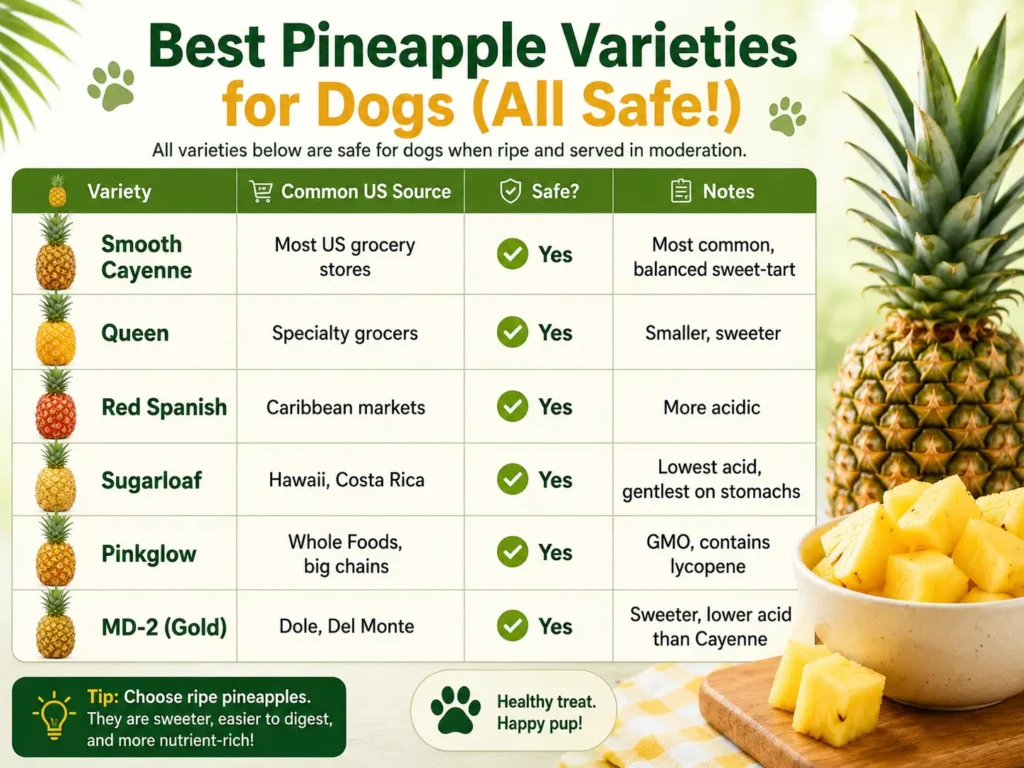
Pineapple Variety Comparison for Dogs
| Variety | Common US Source | Safe? | Notes |
|---|---|---|---|
| Smooth Cayenne | Most US grocery stores | ✅ Yes | Most common, balanced sweet-tart |
| Queen | Specialty grocers | ✅ Yes | Smaller, sweeter |
| Red Spanish | Caribbean markets | ✅ Yes | More acidic |
| Sugarloaf | Hawaii, Costa Rica | ✅ Yes | Lowest acid, gentlest on stomachs |
| Pinkglow | Whole Foods, big chains | ✅ Yes | GMO, contains lycopene |
| MD-2 (Gold) | Dole, Del Monte | ✅ Yes | Sweeter, lower acid than Cayenne |
How Much Pineapple Can Dogs Eat?
Most dogs can eat two or three small pineapple chunks two to three times per week. A chunk means 1/2 inch x 1/2 inch x 1/2 inch (about 4 grams, 2 calories). Toy breeds under 10 pounds get 1 to 2 chunks, while giant breeds can have 10 to 12. Treats stay under 10% of daily calories per UC Davis School of Veterinary Medicine guidelines.
| Dog Size | Weight | Daily Serving | Weekly Frequency |
|---|---|---|---|
| Toy | Under 10 lbs | 1 to 2 pieces | 2 to 3 times |
| Small | 10 to 25 lbs | 2 to 3 pieces | 2 to 3 times |
| Medium | 26 to 50 lbs | 4 to 6 pieces | 2 to 3 times |
| Large | 51 to 90 lbs | 7 to 10 pieces | 2 to 3 times |
| Giant | 91+ lbs | 10 to 12 pieces | 2 to 3 times |
How Often Can Dogs Eat Pineapple?
Two to three small servings per week are the sweet spot for most healthy adult dogs. Daily pineapple is not recommended because of the sugar (about 10 grams per 100 grams) and acid load. Skip on days when your dog already has other treats or table scraps, and stick to the 10% treat rule.
How to Feed Pineapple to Dogs
- Choose a fully ripe pineapple (golden skin, sweet smell at the base)
- Wash the outside thoroughly under cool running water
- Slice off the top and bottom
- Stand the pineapple upright and cut away the spiny skin in vertical strips
- Quarter lengthwise and cut out the tough core from each piece
- Cut the flesh into bite-sized chunks based on your dog’s weight
- Start with one small chunk to test tolerance
- Wait 24 hours and watch for loose stool, gas, vomiting, or itching
- Build up to the right serving size
What to Do If Your Dog Eats Too Much Pineapple
If your dog ate a large amount of pineapple flesh, watch for 24 hours for vomiting, diarrhea, lethargy, gas, or constipation. Offer fresh water and skip the next treat. Call your vet if symptoms last more than a day, get worse, or your dog refuses food. If your dog ate the core or skin, call ASPCA Poison Control at (888) 426-4435 or Pet Poison Helpline at (855) 764-7661 right away.
Common symptoms to watch for:
- Vomiting
- Diarrhea
- Excessive gas or flatulence
- Constipation
- Lethargy
- Decreased appetite
- Mouth or tongue irritation from raw bromelain
When to Avoid Pineapple for Dogs
Skip pineapple if your dog has:
- Active acid reflux, gastritis, or pancreatitis
- Inflammatory bowel disease (IBD)
- Diabetes not well controlled
- Chronic kidney disease without vet approval
- A confirmed pineapple, bromelain, or latex-family allergy
- Surgery is scheduled within 7 days
- An active prescription diet
- Active NSAID or blood thinner use within 24 hours
Can Puppies Eat Pineapple?
Yes, for puppies over 12 weeks that have started solid food. Their main nutrition must come from a balanced puppy formula per AAFCO standards. Start with a tiny piece, no larger than 1/4 inch. Smaller bodies process sugar and acid faster, so reactions show faster, too. Skip pineapple for nursing puppies under 8 weeks. Watch for 24 hours for any reaction.
Should You Feed a Puppy Pineapple to Stop Poop Eating?
No, feeding pineapple to stop a puppy from eating poop does not work. The popular myth claims bromelain makes stool taste bitter, but no peer-reviewed research supports this in dogs. The dose needed would be far higher than safe limits. Coprophagia in puppies is usually caused by curiosity, nutritional gaps, or boredom.
What actually helps:
- Pick up after potty breaks within seconds
- Add enrichment (puzzle toys, training, exercise)
- Rule out medical causes like EPI (exocrine pancreatic insufficiency)
- Switch to a complete and balanced diet
- Use a vet-recommended deterrent supplement if needed
Can Senior Dogs Eat Pineapple?
Yes, in small amounts. The antioxidants may support aging cells. Acidity can bother seniors with dental issues or chronic GI conditions. Mash or finely chop for dogs with bad teeth. Skip pineapple for seniors on prescription diets unless your vet approves.
Can Diabetic Dogs Eat Pineapple?
Only with vet approval. Pineapple has a glycemic index in the medium range and roughly 10 grams of sugar per 100 grams. That is a higher sugar load than blueberries, apple flesh, strawberries, or cucumber. Skip dried, canned, juice, and any cooked-with-sugar forms entirely. If your vet approves, stick to the smallest portion from the serving table. Time the treat around insulin doses, never on an empty stomach.
Does Pineapple Stop Dogs from Eating Poop?
No. There is no solid evidence that pineapple stops dogs from eating poop. The popular theory says bromelain makes stool taste bitter, but no peer-reviewed research supports this in dogs. The dose required would be impractical. Per the AVMA, coprophagia is usually caused by nutritional gaps, boredom, stress, or attention seeking. The real fix is faster cleanup, more enrichment, and a vet visit to rule out medical causes.
Pineapple in Commercial Dog Food and Treats
You might see pineapple, pineapple pomace, or bromelain listed on US dog food and supplement labels. Per AAFCO, all three are approved pet food ingredients. Bromelain shows up in some joint and mobility supplements for its anti-inflammatory effect, and pineapple pomace appears in digestive support formulas. If your dog already eats food with these ingredients, factor that into the daily limit before adding fresh pineapple on top.
Fun Ways to Serve Pineapple to Your Dog
- Pineapple Pup-sicles: blend fresh pineapple with plain Greek yogurt and freeze in silicone molds
- Lick mat topper: mash with plain yogurt on a silicone lick mat
- Kibble topper: dice a tablespoon over dry food
- Kong stuffer: blend with cooked plain chicken and freeze inside a Kong
- Frozen training chunks: small frozen cubes for outdoor training rewards
- Tropical mocktail topper: small chunk in plain coconut water with no added sugar
Homemade Pineapple Dog Treat Recipe
Frozen Pineapple Yogurt Bites (makes about 24 small treats)
Ingredients:
- 1 cup fresh ripe pineapple chunks, peeled and cored
- 1/2 cup plain, unsweetened, xylitol-free Greek yogurt
- 1 tablespoon water
Steps:
- Blend pineapple, yogurt, and water until smooth
- Pour into silicone molds (small bone, paw, or cube shapes work best)
- Freeze for at least 4 hours
- Pop out and store in a freezer-safe container for up to 2 weeks
- Serve one treat per 10 pounds of body weight as an occasional reward
Skip if your dog is lactose intolerant. Substitute coconut milk with no added sugar.
Healthier Alternatives to Pineapple
| Alternative | Why It Works | Read More |
| Blueberries | Lower sugar, high antioxidants | [Can dogs eat blueberries?] |
| Watermelon (seedless) | Hot day hydration, lower acid | [Can dogs eat watermelon?] |
| Mango (no pit, no skin) | Tropical flavor, lower acid | [Can dogs eat mango?] |
| Cucumber | Hydration, near zero calories | [Can dogs eat cucumber?] |
| Apple slices (no core) | Crunch, fiber, vitamin C | [Can dogs eat apples?] |
| Strawberries | Lower sugar | [Can dogs eat strawberries?] |
| Plain coconut water | Electrolytes, no added sugar | [Can dogs drink coconut water?] |
Pesticides and Pineapple: EWG Status
Pineapple sits on the EWG Clean 15 list, making it one of the lowest pesticide-load fruits in the US. The thick outer skin protects the flesh from most residue. Conventional pineapple is fine for dogs, and organic is a small bonus for dogs with sensitivities. Wash the outside before cutting to avoid transferring any surface residue to the flesh.
When to Call Your Vet About Pineapple
Call right away if your dog ate the core, skin, or leaves and shows vomiting, lethargy, hunched posture, or refuses food. Also call for repeated vomiting, blood in stool, or seizures after eating pineapple.
Call within 24 hours if diarrhea or vomiting continues past one day, your dog refuses food, or you see facial swelling, hives, or breathing changes.
Call before introducing pineapple if our dog has diabetes, kidney disease, IBD, pancreatitis, or active acid reflux. Also call first if your dog is on NSAIDs, blood thinners, or any chronic medication.
US emergency lines:
Pet Poison Helpline: (855) 764-7661
ASPCA Animal Poison Control: (888) 426-4435
Can dogs eat pineapple every day?
No, pineapple is best as an occasional treat. The natural sugar and acid can cause weight gain, tooth decay, and stomach upset over time. Two or three small servings per week is the safe range.
Can dogs eat pineapple leaves?
No. The leaves are tough, fibrous, and can cause choking or intestinal blockage. The waxy outer layer is also hard to digest. Keep the whole top of the pineapple out of reach.
How many pineapple chunks can a small dog eat?
For dogs under 25 pounds, 2 to 3 small chunks (each about 1/2 inch) is plenty. Cut chunks even smaller for toy breeds under 10 pounds to reduce choking risk.
Can dogs eat pineapple in yogurt?
Yes, if the yogurt is plain, unsweetened, and xylitol-free. Plain Greek yogurt with fresh pineapple chunks is a popular homemade treat. Avoid flavored or sweetened yogurt.
Can dogs eat pineapple ice cream?
No. Most ice cream contains lactose, sugar, and sometimes xylitol. Make a dog-safe frozen treat with plain Greek yogurt and pineapple instead.
Can dogs eat pineapple upside down cake?
No. Cake contains too much sugar, butter, and sometimes raisins (toxic to dogs) or xylitol.
Is pineapple good for dogs with arthritis?
The bromelain in pineapple has anti-inflammatory properties that may help mild joint discomfort. The acidity and sugar can bother some arthritic dogs. Talk to your vet before regular use.
Can dogs eat dehydrated pineapple?
Plain dehydrated pineapple with no added sugar is safe in tiny amounts. Most commercial dehydrated pineapple has added sugar and preservatives. Drying concentrates sugar several times over.
Does pineapple help with bad breath in dogs?
Possibly. The bromelain helps break down plaque, and the water content rinses the mouth. It is not a substitute for tooth brushing or dental cleanings.
Can dogs eat pineapple if they have IBD or sensitive stomach?
No. The acidity and fiber can worsen IBD, gastritis, and chronic GI conditions.
Are there dog treats made with real pineapple?
Yes. Several US brands sell pineapple-flavored treats. Read labels for added sugar, artificial sweeteners, and xylitol. Plain freeze-dried pineapple is the safest store-bought option.
Can dogs eat pineapple if they are on antibiotics?
Talk to your vet. Pineapple acidity may affect how some antibiotics are absorbed. Bromelain may also alter clearance of certain drugs.
Can dogs eat the pineapple top?
No. The leafy top contains the same tough, fibrous material as the leaves and can cause obstruction.
Can pineapple cause diarrhea in dogs?
Yes, in large amounts. The high fiber and natural sugar can loosen stool. Stick to the serving size table.
The Bottom Line
Fresh ripe pineapple is a safe treat for most healthy dogs in small amounts. Skip the core, the spiny skin, the leaves, and anything canned in syrup. The bromelain in pineapple is a real bonus for digestion, dental health, and inflammation, but the same enzyme means you should skip pineapple if your dog is on NSAIDs or blood thinners. Stick to the size chart, keep poison control numbers saved on your phone, and stick to plain fresh fruit.
Sources: ASPCA Animal Poison Control, AVMA, USDA FoodData Central, Merck Veterinary Manual, UC Davis School of Veterinary Medicine, VCA Animal Hospitals, AAFCO, EWG Clean 15, PubMed-indexed bromelain research, FDA records on the Pinkglow pineapple variety.
Check out Other Fruits Articles:

Written By Dr. Lara Friedman, DVM
Dr. Lara Friedman, DVM, is a veterinarian with 6+ years of experience across hospital, clinic, and shelter medicine, specializing in canine nutrition and preventive care. A graduate of Colorado State University and a Fear Free Certified Professional®, she writes to help dog owners prevent diet-related health issues before they start. She shares her home with her dog, Duke.
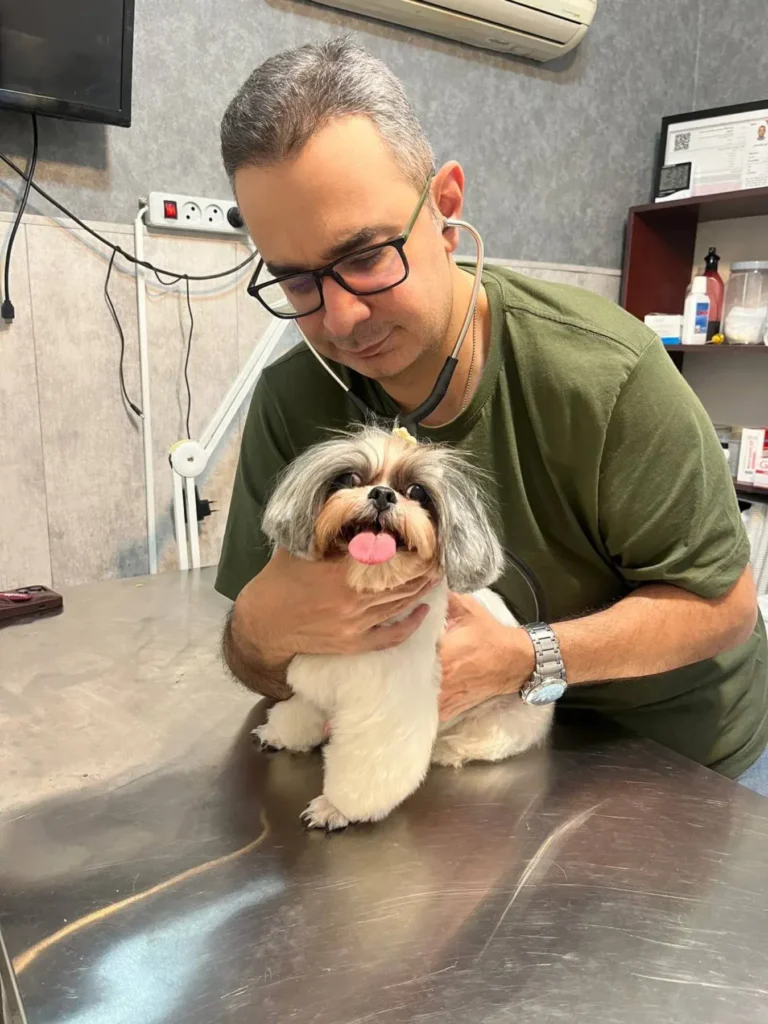
Reviewed By Dr. Jayden DeWitt, DVM
Dr. Jayden DeWitt, DVM, has 10+ years of experience in general veterinary practice, with a focus on canine nutrition and preventive care. He writes to turn real clinical experience into practical, no-nonsense food safety advice dog owners can actually use.