Can Dogs Eat Applesauce? Vet-Backed Serving Guide

By Dr. Lorenzo Bertelli, DVM. Reviewed By Dr. Grace Mullen, DVM
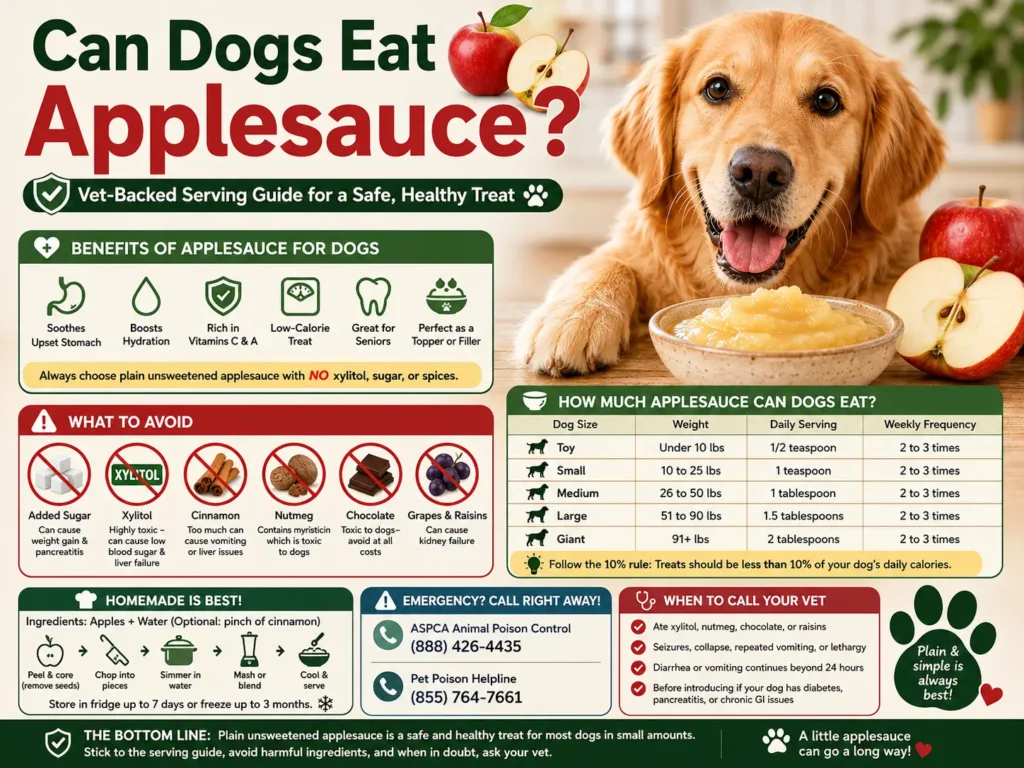
Yes, dogs can eat plain unsweetened applesauce in small amounts. The catch is the label. Many store brands hide sugar, cinnamon, nutmeg, or xylitol, and xylitol is highly toxic to dogs. A safe serving is a teaspoon for small dogs and up to two tablespoons for large dogs, given a few times a week. Homemade is always the safest pick.
Is Applesauce Safe for Dogs?
Plain unsweetened applesauce is safe for most healthy dogs, and this is the one rule worth remembering above everything else on this page. Cooked apples are non-toxic and even gentle on the stomach. The ASPCA does not list apples among toxic foods for dogs. The danger is almost always in what gets added, like sugar, spices, or sweeteners. Skip flavored, sugar-free, or chunky versions.
Emergency: My Dog Just Ate Applesauce, What Should I Do?
Plain unsweetened applesauce: No emergency. Watch for gas or loose stool for 24 hours.
A large amount of sweetened applesauce: Watch for vomiting, diarrhea, or signs of pancreatitis. Skip the next meal, offer water, and call your vet if symptoms last past 24 hours.
Any product with xylitol, nutmeg, or chocolate: This is a medical emergency. Call right away:
- ASPCA Animal Poison Control: (888) 426-4435
- Pet Poison Helpline: (855) 764-7661
Per the Merck Veterinary Manual, xylitol can cause low blood sugar in 30 minutes and liver damage within a day.
Can Dogs Eat Unsweetened Applesauce?
Unsweetened is the only kind dogs should have. Read the label and confirm the ingredients say “apples and water” only. Watch out for “no sugar added” brands that quietly use stevia or xylitol in place of cane sugar. The safest bet is a US store brand labeled “100% apples” or homemade.
Is Unsweetened Applesauce Still Too Sugary for Dogs?
Plain unsweetened applesauce contains about 10 grams of natural fruit sugar per 100 grams. That is fine in small portions but adds up if fed daily. A teaspoon to a tablespoon two or three times a week keeps things safe for healthy dogs. Diabetic, overweight, or pancreatitis-prone dogs should skip it or get vet sign-off first.
Can Dogs Eat Cinnamon Applesauce?
Skip store-bought cinnamon applesauce. It usually packs too much sugar plus more cinnamon than a dog should have. A pinch of cinnamon in homemade applesauce is fine for most dogs. Per Pet Poison Helpline, more than one teaspoon of cinnamon can cause low blood sugar, vomiting, or liver issues in a small dog.
Why Nutmeg Applesauce Is Dangerous
Nutmeg contains myristicin, a compound toxic to dogs. Symptoms include disorientation, fast heart rate, high blood pressure, dry mouth, abdominal pain, and seizures. Holiday applesauce, spiced varieties, and some baby food blends contain it. If your dog ate any nutmeg, call poison control right away.
Can Dogs Eat Mott’s Applesauce?
Only the unsweetened version. Mott’s Original lists high fructose corn syrup as a top ingredient, which offers no value to dogs and may upset their stomach. Mott’s Unsweetened or Mott’s No Sugar Added are the only safe Mott’s options. Skip the cinnamon, mixed berry, and “Snack & Go” blends.
Can Dogs Eat Strawberry Applesauce?
Homemade and unsweetened is the only safe version. Strawberries themselves are safe for dogs and offer vitamin C. Store-bought strawberry applesauce almost always contains added sugar, citric acid, or artificial flavor. Mash fresh strawberries into plain, unsweetened applesauce at home for a safer mix.
Can Dogs Eat Applesauce Pouches?
Plain unsweetened pouches are fine; the rest are not. Many kids’ pouches add sugar, fruit blends, or grape juice. Grapes are toxic to dogs even in small amounts, per the AKC. Mixed fruit pouches with names like “apple grape” or “apple berry” are off limits. Squeeze the contents into a bowl rather than letting your dog chew the plastic pouch.
Benefits of Applesauce for Dogs
Plain applesauce gives dogs real nutrition in roughly 42 calories per 100 grams, per USDA FoodData Central. Key perks:
- Soothes a mild upset stomach. The soluble fiber pectin can firm up loose stools and ease minor diarrhea.
- Boosts hydration. About 88% water content.
- Vitamin C and vitamin A support immune function and skin health.
- Low-calorie treat for weight-managed dogs.
- Soft texture is easier for senior dogs with bad teeth and teething puppies.
- Adds variety as a lick mat topper or Kong filler.
Risks of Applesauce for Dogs
Allergies. Rare, but possible.
Xylitol. The most serious risk. Found in some sugar-free and “diet” applesauce. Toxic at 0.1 grams per kilo of body weight per the AVMA.
Added sugar. Linked to pancreatitis, especially in breeds like Miniature Schnauzers, Yorkies, and Cocker Spaniels, per VCA Animal Hospitals.
Cinnamon and nutmeg. Small amounts are fine; large amounts are not.
Apple seeds. Contain amygdalin, which releases cyanide when chewed. Always core homemade batches.
Preservatives and dyes. Sodium benzoate, potassium sorbate, and Red 40 can upset sensitive stomachs.
How Much Applesauce Can Dogs Eat?
| Dog Size | Weight | Daily Serving | Weekly Frequency |
|---|---|---|---|
| Toy | Under 10 lbs | 1/2 teaspoon | 2 to 3 times |
| Small | 10 to 25 lbs | 1 teaspoon | 2 to 3 times |
| Medium | 26 to 50 lbs | 1 tablespoon | 2 to 3 times |
| Large | 51 to 90 lbs | 1.5 tablespoons | 2 to 3 times |
| Giant | 91+ lbs | 2 tablespoons | 2 to 3 times |
Stick to the 10% treat rule from the UC Davis School of Veterinary Medicine. Treats stay under 10% of daily calories.
How Much Applesauce Can Dogs Have Per Week?
Two to three small servings a week are the safe ceiling for healthy adult dogs. That keeps natural sugar low and leaves room for other treats. Skip a serving on days your dog has already had table scraps or training rewards.
How Often Can Dogs Eat Applesauce?
Two to three times a week is the sweet spot. Daily is not recommended because the fruit sugar adds up. A small daily teaspoon is fine only for short stretches with vet approval, like to disguise medication or help with mild constipation.
How to Feed Applesauce to Dogs
- Check the label and confirm no xylitol, sugar, cinnamon, or nutmeg.
- Start with half the serving for your dog’s size.
- Serve plain or stir into kibble.
- Wait 24 hours and watch for loose stool or itching.
- Build up to the full portion over 5 to 7 days.
Homemade Applesauce for Dogs (3-Ingredient Recipe)
Ingredients:
- 4 medium apples (Fuji, Gala, Honeycrisp, or Pink Lady)
- 1/2 cup water
- Optional: a tiny pinch of cinnamon
Steps:
- Wash apples well.
- Peel, core, and remove every seed.
- Chop into 1-inch pieces.
- Simmer covered with water for 15 to 20 minutes.
- Mash for chunky or blend for smooth.
- Cool fully before serving.
Yield: about 1.5 cups. Calories: roughly 6 per tablespoon.
Storage: Fridge up to 7 days. Freezer: up to 3 months in ice cube trays.
Best Apples for Homemade Dog Applesauce
| Variety | Sweetness | Best Use |
|---|---|---|
| Fuji | High | Senior dog snack |
| Gala | Medium-high | Daily treat batches |
| Honeycrisp | High | Frozen pupsicles |
| Pink Lady | Medium | Mild sugar load |
| Granny Smith | Tart | Skip, too sharp |
Always remove seeds, core, and stem. Organic is best when possible since apples sit on the EWG Dirty Dozen list.
Can Dogs Eat Frozen Applesauce Cups?
Homemade only. Store-bought frozen cups usually contain sugar, citric acid, or preservatives. Freeze a tablespoon of plain unsweetened applesauce in silicone or ice cube molds for a cool summer treat. Frozen applesauce also soothes teething puppy gums.
Can Dogs Eat Warm Applesauce?
Room temperature or slightly warm applesauce is fine, as long as it isn’t hot, and it may appeal to picky eaters or seniors with dental issues. Skip microwaving in plastic. Always test the temperature on your wrist first, the same way you would for a baby.
Is Applesauce Better Than Fresh Apples for Dogs?
Neither one wins overall. Fresh apples crunch and help clean teeth. Applesauce is smoother for seniors, teething puppies, and dogs with dental issues. Apples need prep with seeds and core removed. Applesauce only needs a label check. Pick based on your dog’s needs.
Can Puppies Eat Applesauce?
Puppies can have applesauce once they are on solids, usually after 4 to 6 weeks. Start with 1/4 teaspoon. Frozen plain applesauce can soothe teething gums between 4 and 6 months. Skip it for very young puppies and check with your vet first. Their main nutrition should come from a balanced puppy food.
Can Senior Dogs Eat Applesauce?
Applesauce is one of the best snack picks for seniors. Soft texture works for dogs with dental disease or missing teeth. The fiber supports an aging digestive system. A lower calorie count fits well into reduced senior diets. Mash any chunks for dogs with weak jaws.
Can Small Dogs Eat Applesauce?
Small dogs can have applesauce in tiny portions. Half a teaspoon to one teaspoon is plenty for dogs under 25 pounds. Chihuahuas, Yorkies, Maltese, and Toy Poodles only need a lick or two. Their small size means even small amounts of sugar can upset their stomach or affect their weight.
Can Diabetic Dogs Eat Applesauce?
Vet approval comes first for diabetic dogs. Applesauce contains natural fructose that affects blood glucose. The glycemic load is lower than that of many fruits but still real. If approved, stick to half the standard portion and skip flavored versions. Better diabetic-friendly options are green beans, cucumber slices, and small bits of berries.
Can Sick Dogs Eat Applesauce?
For mild stomach upset, plain unsweetened applesauce can settle a queasy belly and encourage eating. Skip it for active vomiting, severe diarrhea, or serious illness. Always check with your vet first if your dog is on medication or has a chronic condition.
Can Dogs Eat Applesauce for Diarrhea?
A small amount can help. The pectin and water content can firm up loose stools. Dose: 1 teaspoon per 10 pounds of body weight, mixed into a bland meal like boiled chicken and rice. If diarrhea lasts more than 24 hours or shows blood, call your vet.
Can Dogs Eat Applesauce for Constipation?
For mild cases, applesauce can help. The soluble fiber and water can soften the stool. Dose: 1 teaspoon per 10 pounds of body weight, once daily for 2 to 3 days. Plain canned pumpkin works better for chronic constipation. If your dog has not pooped in 48 hours, call your vet.
Is Applesauce a Laxative for Dogs?
Not exactly. Applesauce is not a true laxative, but pectin and water can help with mild constipation by softening the stool. Plain canned pumpkin gives more fiber per spoonful and is the better pick for tougher cases.
Dogs That Should Not Eat Applesauce
- Diabetic dogs without vet sign-off
- Dogs with a pancreatitis history
- Dogs on prescription diets
- Dogs with confirmed apple allergies
- Puppies under 4 weeks
- Dogs with active vomiting or severe diarrhea
Healthier Alternatives to Applesauce for Dogs
| Alternative | Benefit |
| Plain canned pumpkin | Higher fiber for digestion |
| Blueberries | Antioxidants, low glycemic |
| Sliced cucumber | Hydration, near-zero calories |
| Carrot sticks | Vitamin A supports teeth |
| Green beans | Low calorie, diabetic friendly |
| Mashed banana | Potassium, soft texture |
| Sweet potato puree | Beta carotene, fiber |
Fun Ways to Serve Applesauce
- Lick mat topper. Spread a thin layer on a silicone lick mat.
- Frozen pupsicles. Pour into ice cube trays and freeze.
- Kong stuffer. Mix with plain Greek yogurt and freeze inside a Kong.
- Kibble drizzle. TA: a tiny amount over dry food for picky eaters.
- Training reward. Dip a wooden spoon for high-value moments.
- Pill pocket. Mix a small amount around pills (check medication first).
What to Look for on Applesauce Labels
- Safe: Ingredients list reads “apples, water” only.
- Safe: “100% apples” or “unsweetened” with a verified label.
- Avoid: Added sugar, high fructose corn syrup, xylitol, cinnamon, nutmeg, artificial colors, sodium benzoate, potassium sorbate, large amounts of citric acid or ascorbic acid.
- Caution: “Organic” alone does not mean dog-safe. Always read the back.
When to Call Your Vet About Applesauce
Call right away if your dog ate xylitol, nutmeg, chocolate, or raisins, or shows seizures, collapse, repeated vomiting, or extreme lethargy.
Call within 24 hours if diarrhea or vomiting continues, your dog refuses food, or the belly looks swollen.
Call before introducing if: diabetes, pancreatitis history, chronic GI issues, or prescription diet.
US emergency lines:
Pet Poison Helpline: (855) 764-7661
ASPCA Animal Poison Control: (888) 426-4435
Can dogs eat applesauce every day?
Not recommended. Stick to serving plain unsweetened applesauce just 2 to 3 times a week to avoid excess natural sugar in your dog’s diet.
Can dogs eat applesauce with cinnamon and sugar?
No. Applesauce containing added sugar and large amounts of cinnamon can upset your dog’s stomach and add unnecessary calories. Plain unsweetened applesauce is the safest choice.
Is applesauce safe for dogs with kidney disease?
Applesauce is relatively low in phosphorus, but dogs with kidney disease should only eat it with approval from their veterinarian.
Can dogs eat baby food applesauce?
Yes, but only if the ingredient list contains apples and water only. Avoid baby food with added vitamins, sugar, cinnamon, nutmeg, or other spices.
Will applesauce help my dog gain weight?
No. Applesauce is relatively low in calories and is not an effective food for healthy weight gain in dogs.
Can dogs eat applesauce with their meds?
Sometimes. A small amount of plain unsweetened applesauce can help hide medication, but always ask your veterinarian first because it may affect how certain medicines are absorbed.
The Bottom Line
Plain unsweetened applesauce is a safe treat for most healthy dogs in small amounts. Skip anything with xylitol, sugar, cinnamon, or nutmeg. Homemade is the safest pick because you control every ingredient. Stick to the size chart, follow the 10% rule, and call your vet or ASPCA Poison Control if anything seems off.
Sources: ASPCA Animal Poison Control, AVMA, American Kennel Club, USDA FoodData Central, Merck Veterinary Manual, UC Davis School of Veterinary Medicine, VCA Animal Hospitals, Pet Poison Helpline, FDA Consumer Updates, Environmental Working Group.
Read other Fruits Articles
Written By Dr. Lorenzo Bertelli
Dr. Lorenzo Bertelli, DVM, is a veterinarian with 5+ years of experience in small animal medicine, specializing in canine nutrition and preventive care. A graduate of the University of Florida, he writes to help dog owners make confident, informed feeding decisions. He shares his home with two dogs, Zeus and Rocky.
Reviewed By Dr. Grace Mullen, DVM
Dr. Grace Mullen, DVM, is a veterinarian and Hospital Medical Director with more than 8 years of experience in small animal medicine, with a clinical focus on internal medicine and canine nutrition. A graduate of Michigan State University College of Veterinary Medicine and a member of the American Veterinary Medical Association (AVMA), she writes evidence-based articles that help dog owners make safe, informed feeding decisions. She lives with her two dogs, Milo and Cooper.