Can Dogs Eat Cheese? Safe Types, Portions, and Risks
Published: October 2026

By Dr. Lorenzo Bertelli. Reviewed By Dr. Bradley Pierson, DVM
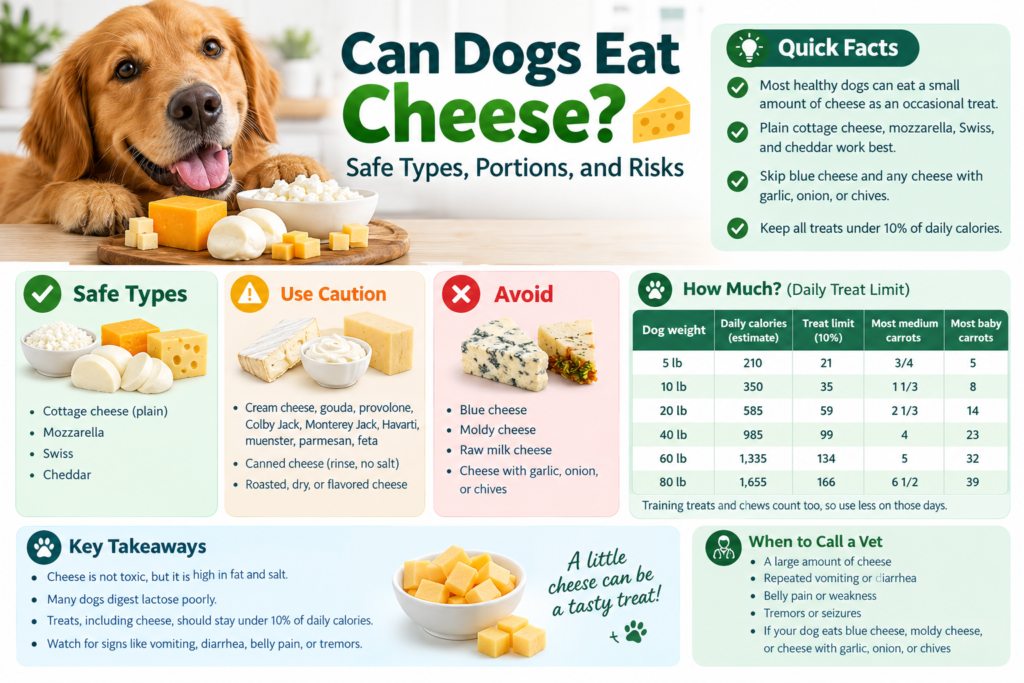
Yes, most healthy dogs can eat a small amount of cheese as an occasional treat. Cheese is not toxic, but it is high in fat and salt, and many adult dogs digest lactose poorly. Plain cottage cheese, mozzarella, Swiss, and cheddar work best, in pieces about the size of a pea. Skip blue cheese and any cheese with garlic, onion, or chives. Call your vet if your dog eats a lot or seems sick.
Key takeaways
- Keep all treats, cheese included, under 10 percent of daily calories. [9]
- Plain cottage cheese is the lightest pick, at about 28 calories per ounce. [10]
- Fat is the main risk, because it can help trigger pancreatitis. [2]
- Never feed blue cheese, moldy cheese, raw milk cheese, or cheese with garlic, onion, or chives.
- Call a vet for a large amount, repeated vomiting, belly pain, or tremors.
Can dogs eat cheese?
Yes, in small amounts. Cheese is not toxic, but dogs make little lactase, the enzyme that digests milk sugar, so dairy can cause diarrhea or other stomach upset. [1] Fatty foods can also cause vomiting, diarrhea, and sometimes pancreatitis. [1]
Is cheese good for dogs?
It has protein and calcium, but a complete dog food already supplies both. One ounce of cheddar has about 6 grams of protein, 200 milligrams of calcium, and 113 calories. [10] Treat it as a snack, not a supplement.
Is cheese bad for dogs?
Not in small amounts for a healthy dog. Fat is the main concern, because table scraps and other fatty extras are common risk factors for pancreatitis. [2] Salt, lactose, and extra weight add to it.
Is it OK to give dogs cheese?
Yes, when your dog is healthy, the cheese is plain, and the piece is small. Read the label for garlic, onion, chives, and herbs first. If your dog has had pancreatitis, ask your vet before offering any.
How much cheese can a dog eat?
Count cheese inside the 10 percent treat limit that AAHA and WSAVA recommend. [9] Tufts even counts cheese slices used to give pills. [6] This table shows the full daily treat budget spent on cheese alone. Daily calories are Tufts averages. [6][7]
| Dog weight | Daily calories | Treat budget (10%) | Cheddar | Cottage cheese |
|---|---|---|---|---|
| 10 lb | About 300 | 30 | ¼ oz | 1 oz |
| 65 lb, lean | About 1,000 | 100 | Just under 1 oz | 3.5 oz |
| 75 lb | About 1,400 | 140 | About 1¼ oz | 5 oz |
Training treats and chews count too, so use less on those days.
Can dogs eat cheese every day?
A big dog may fit a small daily bite, but a small dog cannot. A 10-pound dog’s whole treat budget is about 30 calories, or a quarter ounce of cheddar. Most dogs do better with cheese now and then.
Why do dogs like cheese?
It smells strong and tastes rich. Fat and salt make it a high-reward food.
Is cheese completely safe for dogs?
No. Blue cheese, moldy cheese, raw milk cheese, and cheese with garlic, onion, or chives can cause real harm, and some dogs should skip cheese altogether.
What kind of cheese can dogs eat?
Choose plain, pasteurized cheese that is lower in fat and salt. The table uses rounded USDA averages per ounce, so check your label. [10] Hard cheeses such as cheddar and Swiss have less lactose than other dairy foods. [5]
| Cheese | Calories per ounce | Sodium per ounce | Verdict |
|---|---|---|---|
| Cottage cheese, creamed | About 28 | About 100 mg | Best pick, plain only |
| Mozzarella, whole milk | About 80 | 140 to 180 mg | Small bites |
| Swiss | About 108 | About 55 mg | Small bites |
| Cheddar | About 113 | About 180 mg | Small bites |
| Cream cheese | About 99 | About 90 mg | Rarely, plain only |
| Parmesan | 110 to 120 | About 430 mg | Pinch at most |
| Feta | About 75 | About 260 mg | Skip |
| American, processed | About 106 | About 470 mg | Skip |
| Blue cheese | About 100 | About 395 mg | Never |
Published vet advice splits on cream cheese, string cheese, goat cheese, and the lactose in cottage cheese. Treat all four as occasional treats.
What cheese can dogs eat if they have a sensitive stomach?
Start with plain cottage cheese. Cheese carries less lactose than milk because much of it is removed or broken down during making. [4] Offer one pea-sized piece and check the next stool. Gas or soft stool means stop.
Can dogs eat cottage cheese?
Yes. Plain cottage cheese is the best pick, at about 28 calories and 100 milligrams of sodium per ounce. [10] A 10-pound dog can have about an ounce as its whole daily treat. Skip versions with chives, fruit, or sugar.
Can dogs eat cream cheese?
Rarely. Plain cream cheese is not toxic, but it has about 10 grams of fat per ounce. [10] Chives, onions, and garlic tubs from the bagel shop are worse, since those plants harm dogs. [1] A thin smear on a lick mat is the safest use.
Can dogs eat mozzarella cheese?
Yes, in small amounts. Part-skim mozzarella has less fat than most cheese, at roughly 70 to 80 calories per ounce. [10] Fresh mozzarella balls sit in brine, so pat them dry.
Can dogs eat string cheese?
Yes, in tiny bits. One stick has about 70 to 85 calories, over twice a 10-pound dog’s daily treat budget. Tear off pea-sized pieces and remove the wrapper. Can dogs eat cheese sticks? Plain sticks follow the same rules. Fried mozzarella sticks from a restaurant do not, since breading and oil add fat and salt.
Can dogs eat cheddar cheese? Is sharp cheddar different?
Yes, in small amounts. Cheddar has about 113 calories, 9 grams of fat, and 180 milligrams of sodium per ounce. [10] Can dogs eat sharp cheddar cheese? Yes, with the same limits. Hard cheeses are lower in lactose, but the fat does not change. [5]
Can dogs eat American cheese or yellow cheese?
Can dogs eat American cheese? It is a poor choice. Processed slices, like the wrapped kind on burgers, average about 106 calories and 470 milligrams of sodium per ounce. [10] Yellow cheese is a color, not a type, so check whether it is cheddar, American, or a processed slice. A tiny piece to hide a pill is fine.
Can dogs eat Swiss cheese?
Yes. Swiss has less sodium than most hard cheeses, about 55 milligrams per ounce, and little lactose. [5][10] It still has about 108 calories per ounce, so keep the piece small. Skip flavored slices.
Can dogs eat provolone, Colby Jack, Monterey Jack, Havarti, or muenster cheese?
Plain versions act like cheddar: rich, mildly salty, fine in tiny bites. Can dogs eat provolone cheese? Yes, at about 100 calories per ounce. [10] Can dogs eat Colby Jack cheese or Monterey Jack cheese? Yes, if plain. Can dogs eat havarti cheese or muenster cheese? Yes, but Havarti is often flavored with dill, garlic, or jalapeño, so read the label.
Can dogs eat parmesan or feta cheese?
Both are salty. Parmesan has about 430 milligrams of sodium per ounce and feta about 260. [10] Too much salt can cause vomiting, diarrhea, tremors, and seizures. [1] Can dogs eat parmesan cheese? A pinch on dinner is the limit. Can dogs eat feta cheese? Skip it.
Can dogs eat goat cheese, brie, ricotta, or gouda?
These are richer or fresher. Can dogs eat goat cheese? Vet advice conflicts, and it has about 8 grams of fat per ounce, so give a lick at most. Can dogs eat brie cheese? Skip it, with 8 grams of fat per ounce. Can dogs eat ricotta cheese? A spoonful is fine, but fresh cheeses carry more lactose. [5] Can dogs eat gouda cheese? A tiny piece of aged gouda is low in lactose but high in fat.
Can dogs eat Babybel cheese?
Yes, in small amounts, after you remove the wax and the plastic wrapper. Give a toy breed about a quarter of one round.
Can dogs eat shredded cheese?
Plain shredded cheddar or mozzarella follows the same rules as block cheese, but a handful is easy to overfeed. Taco and Italian blends may include seasonings or garlic, so read the bag.
Can dogs eat blue cheese?
No. Blue cheese is made with mold. Vet toxicology sources list moldy dairy as a source of tremor-causing mycotoxins in dogs, and roquefortine C is one of them. [3][17] Its exact role is debated, and cases are rare, but these toxins affect the nervous system, and some dogs stayed unsteady for months. [3] Never feed moldy cheese, and keep trash and compost locked.
Can dogs eat pepper jack or spicy cheese?
Skip it. Pepper jack adds spicy peppers that can upset a dog’s stomach, plus extra salt and sometimes onion or garlic powder.
Can dogs eat pimento cheese?
No. Southern-style pimento cheese is cheddar blended with mayonnaise, so it is very fatty, and many recipes add onion or garlic. [1]
Can dogs eat raw milk cheese?
No. FDA says raw milk can carry Salmonella, E. coli, and Listeria. [11] ASPCA also warns that bacteria in raw foods can harm pets and people. [1] Choose pasteurized.
Can dogs eat cheese with garlic, onion, or chives?
No. These plants belong to the Allium family, and ASPCA says they can irritate the stomach and may damage red blood cells. [1] Garlic herb spreads, French onion dip, and ranch-seasoned cheese are common sources.
Are dogs lactose intolerant?
Many adult dogs are. After weaning, lactase drops to about 10 percent of its peak. [4] Cow’s milk has 4.5 to 5 percent lactose, compared with 3.1 percent in dog milk. [4] A milk allergy is a separate immune reaction.
How do I know if my dog is lactose intolerant?
Look for gas, loose stool, or belly rumbling after dairy. Loose stool each time milk is fed points to intolerance. [4] Try one pea-sized piece on a normal day and check the next stool. Call your vet for vomiting, blood, or repeated diarrhea.
Can cheese cause pancreatitis in dogs?
It can contribute. Pancreatitis is the most common pancreas disease in dogs, and eating trash or large amounts of table scraps is a common risk factor. [2] Miniature Schnauzers, Yorkshire Terriers, Cocker Spaniels, Dachshunds, and Poodles have higher rates. [2] Signs include vomiting, belly pain, weakness, poor appetite, and diarrhea. [2]
Can dogs with pancreatitis eat cheese?
Ask your vet first. For mild cases, Merck says dogs usually move to a low-fat diet and low-fat treats, which rules out most cheese. [2] If your vet allows any, ask which kind and how much.
Is milk worse than cheese for dogs?
For the stomach, milk is usually worse, because cheese loses much of its lactose during making. [4] For weight and pancreatitis risk, cheese is worse, since it packs more fat per ounce. Neither is needed.
Can dogs eat mac and cheese?
No. Boxed powder and restaurant sauces are heavy in salt and fat, and many use onion or garlic powder. [1] Can dogs eat macaroni and cheese from a baked casserole? Same answer. Can dogs eat mac n cheese that fell on the floor? A lick will not hurt a big healthy dog. Call your vet if a small dog ate a bowl.
Can dogs eat cheese pizza?
Not on purpose. Sauce and crust often contain garlic or onion, and the salt and grease are high. [1] If your dog steals a slice on pizza night, check for onion, garlic, and sausage toppings.
Can dogs eat grilled cheese?
Skip it. Butter, bread, and cheese make a mostly fat and salt snack. One small bite is unlikely to harm a healthy dog, but there is no reason to offer it.
Can dogs eat cheesecake?
No. It is sugar and fat. Sugar-free versions may contain xylitol, which can cause low blood sugar, seizures, and liver failure in dogs. [12] Chocolate flavors add another risk. [1] If xylitol is possible, call your vet or a poison line right away.
Can dogs eat cheese puffs or cheese balls?
Can dogs eat cheese puffs? A few will not poison a healthy dog, but they are salty and greasy, and some brands use onion or garlic powder. [1] Can dogs eat cheese balls? Party versions are often rolled in nuts, and ASPCA warns fatty nuts can cause vomiting, diarrhea, and pancreatitis. [1] Skip both.
Can dogs eat eggs and cheese?
Plain, fully cooked egg with a small piece of cheese is a low-risk breakfast scrap. Skip raw eggs, which can carry bacteria, plus butter, salt, and sausage. [1]
Can puppies eat cheese?
Ask your vet first. Puppies make plenty of lactase while nursing and lose much of it after weaning. [4] If your vet approves a reward, use pieces smaller than a pea, since a puppy’s daily calorie budget is tiny.
Can senior dogs eat cheese?
Maybe, in tiny bites. Pancreatitis appears more often in middle-aged and older dogs, especially overweight ones. [18] Ask your vet if your senior has stomach, heart, kidney, or pancreas problems.
Can overweight dogs eat cheese?
It is better to skip it. A study cited by Tufts found dogs only 10 to 20 percent overweight lived almost two years less on average. [15] Try baby carrots at 5 calories each instead. [8]
Can dogs with kidney or heart disease eat cheese?
Ask your vet first. Tufts advises lower-salt foods for pets with heart conditions, and cheese is salty. [8] Cheddar also has about 455 milligrams of phosphorus per 100 grams. [10]
Can dogs on a prescription diet have cheese?
Often not. VCA notes that some veterinary diets, such as urinary foods, may not work properly when extra treats are added. [14] Call your vet first.
What happens if my dog eats too much cheese?
Common signs are gas, loose stool, vomiting, and belly pain. Too much salt can cause tremors, a high temperature, and seizures. [1] Severe pancreatitis can cause poor appetite, weakness, and dehydration. [2] Take these steps:
- Pick up leftovers and the wrapper.
- Note the type, amount, and time.
- Call your vet or a 224-houranimal ER after hours.
- Do not make your dog vomit unless a vet says so. [16]
My dog ate a whole block of cheese. What should I do?
Check the label for garlic, onion, chives, sweeteners, or mold. Then call your vet or a poison line with your dog’s weight, the cheese type, the amount, and the time. A big Costco block is a heavy fat dose, especially for a small dog. Go to an ER vet for repeated vomiting, a swollen or painful belly, weakness, tremors, or seizures.
How long after eating cheese will symptoms show?
No single clock fits every dog. Merck notes many dogs with pancreatitis show no signs until late in the disease. [2] After a large or fatty serving, call your vet instead of waiting. After a small bite, watch appetite and stool over the next day.
When should I call a vet after my dog eats cheese?
Call right away for a large amount, any garlic, onion, chive, mold, blue cheese, or sweetener exposure, or signs such as repeated vomiting, bloody diarrhea, belly pain, weakness, tremors, or seizures. ASPCA Animal Poison Control is 888.426.4435, and Pet Poison Helpline is 855.764.7661. Both answer around the clock, and fees apply. [1][16]
What if my dog ate cheese with garlic or onion in it?
Call with your dog’s weight and the amount eaten, since the risk depends on both. [1]
Can I hide my dog’s pills in cheese?
Often, but check the medicine first. Use a pea-sized piece and count it toward the treat budget. [6]
Is it safe to hide antibiotics in cheese?
Not always. Cheese contains calcium, and the European label for doxycycline tablets for dogs warns that certain mineral cations reduce how much drug is available. [13] One vet hospital’s handout says to avoid cheese with enrofloxacin. [19] Ask your vet which of your dog’s medicines are affected.
Is cheese a good training treat for dogs?
It works because dogs love it, but calories add up. Tufts says training treats count toward the 10 percent limit. [6] Smaller bits mean more rewards per calorie.
Can dogs have cheese on a lick mat or Kong?
Yes. A thin smear of plain cottage cheese works, and freezing it makes it last. Skip cream cheese flavors with garlic or chives.
What are healthier treats than cheese?
Tufts lists baby carrots at 5 calories each, cucumber at 8 calories per half cup, green beans at 30 per cup, and blueberries at 20 per quarter cup. [8]
Can dogs eat lactose-free cheese?
Yes, with the same limits. Lactose-free cheese removes the sugar but not the fat or salt. [5]
How we reviewed this article
Dr. Lorenzo Bertelli wrote this guide, and Dr. Bradley Pierson, DVM, reviewed it on 20 October 2026. Nutrition numbers are rounded averages from USDA FoodData Central, and labels vary by brand. This article is general information, not veterinary advice. Call your vet or an animal poison line for a sick dog. Next review: [date].
Sources
- ASPCA: People Foods to Avoid Feeding Your Pets
- Merck Veterinary Manual: Pancreatitis in Dogs
- Merck Veterinary Manual: Tremorgenic Neuromycotoxicosis in Dogs
- Canadian Veterinary Medical Association: Pets and Dairy Products
- NIDDK: Diet and Lactose Intolerance
- Tufts Cummings School: Top Five Nutrition Mistakes
- Tufts Cummings School: Treat Calorie Guide
- Tufts Cummings School: Healthy and Harmful Human Foods
- Veterinary Sciences 2025: WSAVA and AAHA Treat Guidance
- USDA FoodData Central
- FDA: Raw Milk
- Pet Poison Helpline: Xylitol and Dogs
- EU Veterinary Medicines Database: Doxycycline Tablets for Dogs
- VCA Hospitals: Dog Treats
- Tufts Your Dog: Low Calorie Treats
- Pet Poison Helpline
- ASPCA Pro: Tremorgenic Mycotoxin Intoxication
- K. W. Simpson, DACVIM: Acute Pancreatitis in Dogs, VIN
- Marvista Vet: Enrofloxacin Handout
By Dr. Lorenzo Bertelli, DVM
Dr. Lorenzo Bertelli, DVM, is a veterinarian with 5+ years of experience in small animal medicine, specializing in canine nutrition and preventive care. A graduate of the University of Florida, he writes to help dog owners make confident, informed feeding decisions. He shares his home with two dogs, Zeus and Rocky.

Reviewed by Dr. Bradley Pierson, DVM
Dr. Bradley Pierson, DVM, is a veterinarian with 15+ years of experience in small animal medicine, specializing in internal medicine and preventive care. A graduate of the University of Illinois and Fear Free Certified Professional, she writes to help dog owners navigate food safety at every life stage. She has also volunteered extensively in dog shelter care.