Can Dogs Eat Broccoli? Vet-Reviewed Guide to Raw, Cooked, Stems, and Safe Amounts

By Dr. Lorenzo Bertelli. Reviewed By Dr. Grace Mullen, DVM
Published: 12 October, 2026
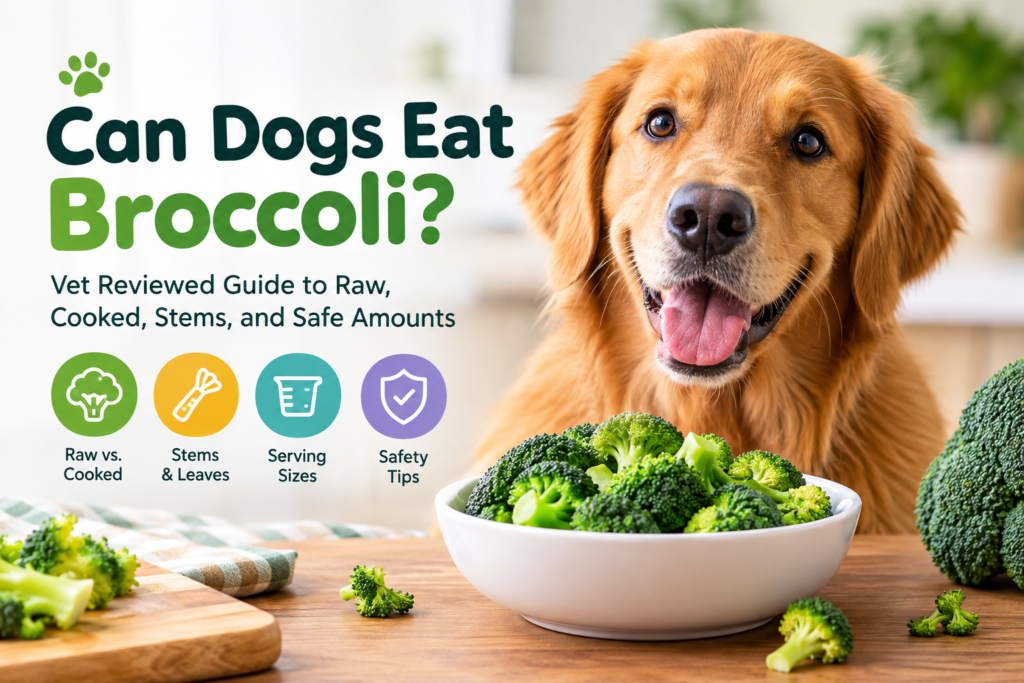
Yes, dogs can eat broccoli. Plain, chopped florets are a safe treat for most healthy dogs when the portion stays small. The ASPCA lists broccoli as safe to share sparingly, as long as it has no seasoning. The risks come from stalks, big pieces, and too much at once. Below you will find serving sizes by weight, raw versus cooked, and what to do if your dog eats too much.
Quick Answer
Yes. A few small, plain pieces of broccoli, raw or cooked, are fine for most healthy dogs a couple of times a week. Chop the pieces small, skip butter, oil, salt, garlic, and onion, and keep all treats under 10% of daily calories. Ask your vet first if your dog has a health condition.
Key Takeaways
- Broccoli is not toxic to dogs. The ASPCA lists it as safe to share sparingly.
- Too much can cause gas, loose stool, or an upset stomach.
- Chop stalks small or cook them. Big pieces can cause choking or a blockage.
- A cup of chopped broccoli has only about 30 calories, so your dog’s stomach sets the limit, not the calorie count.
- Call your vet or the ASPCA Animal Poison Control Center at (888) 426- 4435 if your dog vomits again and again, gags, or acts sick.
Can Dogs Eat Broccoli?
Yes, in small amounts. Broccoli is a low-calorie veggie that most healthy dogs handle well when it is plain and cut small. The ASPCA Animal Poison Control Center puts broccoli on its list of people foods to share sparingly, in small portions, unseasoned and cut into pieces. Think of it as a snack, not a meal. Your dog’s regular food should supply almost all of its calories.
Is Broccoli Toxic to Dogs?
No. Broccoli is not on the ASPCA’s keep-away list, which includes chocolate, grapes and raisins, onions, garlic, avocado, macadamia nuts, and xylitol. Large amounts can still upset a dog’s stomach, but that is a tolerance problem, not poisoning.
The real danger is what gets cooked with the broccoli. The ASPCA says garlic and onions can irritate the gut and, in larger amounts, damage red blood cells and cause anemia.
Is Broccoli Good for Dogs? What the USDA Data Shows
It is a decent snack, but your dog does not need it. USDA FoodData Central lists raw broccoli at about 31 to 34 calories per 100 grams. One cup of chopped broccoli weighs about 90 grams. Every 100 grams has about 2.6 grams of fiber, 316 milligrams of potassium, 89 milligrams of vitamin C, and 102 micrograms of vitamin K.
Dogs make their own vitamin C, so they do not need it from vegetables. A complete and balanced dog food already covers their needs. The fiber can help some dogs feel full, and the calories are low.
You may read that broccoli fights cancer or protects joints. Those claims come from studies on a broccoli compound called sulforaphane. Most of that work used cells and lab animals. No dog study shows a health benefit from eating broccoli, so treat those claims with caution.
Why Can Broccoli Upset a Dog’s Stomach? Isothiocyanates Explained
Broccoli contains sulfur compounds called glucosinolates. Inside the plant, they sit apart from an enzyme called myrosinase. When broccoli is chopped or chewed, the cells break open, the enzyme meets the glucosinolates, and they turn into isothiocyanates. The Linus Pauling Institute at Oregon State University describes this process.
Veterinary sources link large amounts of isothiocyanates to stomach irritation in dogs. No dog study says how much it takes. Gas, loose stool, and vomiting are the usual signs.
Cooking changes the picture. Heat shuts down myrosinase. A review in PubMed Central reports that fresh broccoli yields about three times more isothiocyanates than cooked broccoli. That research is in people and in the lab, not in dogs. So it is reasonable, but not proven, that steamed broccoli is gentler on your dog’s stomach than raw.
Is More Than 25% Broccoli Really Toxic to Dogs?
You will see a rule online that broccoli turns toxic when it makes up more than 25% of a dog’s diet. It traces back to one veterinarian’s quote that other sites keep repeating. We could not find a published dog study that tests that number. The rule also does not say whether 25% means calories or the weight of the food.
What we do know is simple. A diet that is a quarter broccoli would be mostly vegetables, which no dog needs. A treat-sized portion is nowhere near that line.
Can Dogs Eat Raw Broccoli?
Yes, if it is washed and chopped small. Raw broccoli is firm, so it is a bigger choking risk than cooked, and it makes the most isothiocyanates. That can mean more gas.
If you serve broccoli raw, use florets only. Cut them smaller than a piece of kibble for a small dog, or about the size of a nickel for a big dog. Rinse them under running water first. Start with one piece and wait a day.
Can Dogs Eat Cooked Broccoli?
Yes. Steamed or boiled broccoli with nothing added is a good choice, especially for small dogs, seniors, and dogs with sensitive stomachs. Cooking softens the pieces, which lowers the choking risk.
Skip butter, oil, salt, cheese, garlic, and onion. Salt and fat can upset the stomach, and garlic and onion are on the ASPCA’s keep-away list. USDA data puts cooked broccoli at about 35 calories per 100 grams, nearly the same as raw.
Can dogs eat steamed broccoli?
Yes, and it is the easiest way to serve it. Steam florets for 3 to 5 minutes until tender, let them cool, then chop. Microwaving them in a covered bowl with a splash of water works too.
Raw vs. cooked broccoli for dogs
| Comparison | Raw Broccoli | Steamed or Boiled |
|---|---|---|
| Choking Risk | Higher — firm pieces | Lower — soft pieces |
| Isothiocyanates | Highest, based on research in people and labs | Lower, because heat disables myrosinase |
| Gas | More likely | Less likely, but not guaranteed |
| Best For | Big dogs that chew well | Small dogs, seniors, sensitive stomachs, and first tries |
| Preparation | Wash and chop small | Steam for 3–5 minutes, cool, and chop |
Can Dogs Eat Broccoli Stems?
Yes, but chop or cook them first. Stalks are tough and stringy. A big chunk can lodge in the throat or esophagus, or cause a blockage farther down. Small dogs face the highest risk.
Peel the outer skin, slice the stalk into thin coins or small cubes, and steam until soft. If your dog gulps food without chewing, skip the stalks and stick to florets. Sources disagree on whether stalks or florets hold more isothiocyanates, so size and softness are the safer guides.
Can Dogs Eat Broccoli Leaves?
Probably in a small amount, but sources disagree, so the careful move is to skip them or offer one small piece. USDA lists raw broccoli leaves at about 28 calories per 100 grams, close to the florets. We found no source that tests them in dogs. If your dog snacks on a few leaves in the garden, watch for gas or loose stool.
Can Dogs Eat Frozen Broccoli?
Safer thawed. Frozen pieces are rock hard, which makes them a choking risk and can hurt teeth. For a cool snack, thaw frozen florets, chop them small, then chill them. Plain frozen broccoli from the grocery store is fine once cooked. Skip bags with sauce, butter, or seasoning.
Can Dogs Eat Broccolini?
Yes, in the same small amounts. Broccolini is a cross between broccoli and Chinese kale, and we found no source listing it as toxic to dogs. Chop the stems small, steam it, and keep it plain. Restaurant broccolini is usually cooked with garlic and oil, so only share pieces you cooked at home.
Can Dogs Eat Broccoli and Cauliflower?
Yes. Both are cruciferous vegetables, and the ASPCA lists both as safe to share sparingly. The same rules apply: plain, chopped, and in small amounts. Count them toward one small portion, because cauliflower and broccoli together double the gas risk.
| Vegetable | Safe for Dogs? | What to Watch |
|---|---|---|
| Broccoli | Yes, sparingly ASPCA | Stalks and gas |
| Cauliflower | Yes, sparingly ASPCA | Gas and tough stalks |
| Broccolini | Likely fine Not on the toxic lists checked | Thick stems, garlic, and oil |
| Brussels Sprouts and Cabbage | Generally considered suitable in moderation Not on the ASPCA keep-away list | Strong gas and bloating; start with one bite |
How Much Broccoli Can a Dog Eat? Serving Sizes by Weight
No dog study sets an exact dose. These starting amounts are cautious. They keep broccoli far under 10% of daily calories and small enough to limit gas.
| Dog Weight | Starting Serving | How Often | Calories per Serving |
|---|---|---|---|
| Under 10 lbs | 1–2 teaspoons | 1–2 times a week | About 1 |
| 10–25 lbs | 1 tablespoon | Up to 3 times a week | About 2 |
| 26–50 lbs | 2 tablespoons | Up to 3 times a week | About 4 |
| 51–90 lbs | 3–4 tablespoons | Up to 3 times a week | About 6–8 |
| Over 90 lbs | Up to 1/4 cup | Up to 3 times a week | About 8 |
The calorie math
Vets estimate a dog’s resting calories with this formula: 70 times body weight in kilograms, raised to the 0.75 power. A review in PubMed Central lays it out. A common estimate for a neutered adult is 1.6 times that number.
A 50-pound dog is 22.7 kilograms. That works out to about 730 resting calories and roughly 1,160 calories a day. The Merck Veterinary Manual says treats should stay under 10% of daily calories, so this dog’s treat budget is about 115 calories for everything. Two tablespoons of broccoli use about 4 of them.
Calories are not the issue with broccoli. Your dog’s stomach is.
Can Dogs Eat Broccoli Every Day?
A few times a week is the safer start. If your dog does well, a very small daily amount is probably fine, but gas tends to build. Watch the stool and skip a day if it gets loose. You can rotate with other plain veggies like carrots or green beans.
Can Puppies Eat Broccoli?
A tiny piece of cooked, finely chopped broccoli is usually okay once a puppy eats solid food. Puppy stomachs are sensitive, and sources disagree on whether to wait, so ask your vet at the next visit. Use half the amount in the table and skip raw stalks.
Which Dogs Should Skip Broccoli?
Ask your vet before offering broccoli if your dog:
- has a history of stomach or bowel problems, like colitis or IBD
- eats a prescription or vet-planned diet
- has diabetes or kidney disease, since any treat change should fit the care plan
- takes thyroid medication. In very large amounts, cruciferous vegetables contain compounds that can affect thyroid function in some animals. Dog research is limited, so this is a question for your vet, not a reason to panic
- Has painful teeth or gum disease, in which case cook it soft
- Has ever had a food allergy
How Do You Prepare Broccoli for Your Dog?
- Rinse the broccoli under cool running water.
- Cut off the florets. Peel and slice any stalk you plan to use.
- Steam for 3 to 5 minutes until tender. Raw florets are fine for dogs that chew well.
- Let it cool all the way.
- Chop into pieces smaller than your dog’s kibble, or about the size of a nickel for a big dog.
- Serve it plain. Offer one piece the first time and watch for 24 hours.
A few easy ways to serve it: mix a spoonful into dinner, use a few pieces as training treats, or stir a little into plain cooked rice.
What Happens If a Dog Eats Too Much Broccoli?
Most dogs get gas, a gurgly belly, loose stool, or mild stomach upset. These usually pass within a day. Call your vet if the vomiting or diarrhea keeps going, your dog won’t eat or drink, or your dog seems tired or in pain.
Stomach upset often shows up within hours. The Texas A&M University College of Veterinary Medicine notes that some food problems can take up to a day to show, so keep watching for 24 hours.
My Dog Ate a Whole Head of Broccoli. What Should I Do?
Take the rest away, offer fresh water, and watch your dog closely for the next 24 hours. Check what else was on it. Garlic, onion, butter, or sauce changes things.
Call your vet or an emergency animal hospital right away if you see:
- gagging, drooling, pawing at the mouth, or coughing, which can mean choking
- vomiting again and again
- a swollen or painful belly
- straining to poop, or no stool
- sudden tiredness or no interest in food
For after-hours help, call the ASPCA Animal Poison Control Center at (888) 426- 4435. The line is open every day, around the clock, and a consultation fee may apply. Have the package or a photo of what your dog ate handy.
Can Broccoli Kill a Dog?
Not by itself, and not at normal amounts. The ASPCA lists broccoli as safe to share sparingly, which tells you the vegetable has low toxicity. The real emergencies are choking, a blockage from big pieces, and poisoning from seasonings like garlic and onion. Some sites claim broccoli can cause death. We found no published case reports to back that up.
Why Does My Dog Get Gassy After Eating Broccoli?
Broccoli has fiber and sulfur compounds, and gut bacteria ferment both. That makes gas, and the sulfur can make it smell. Feed smaller pieces, steam them, and introduce broccoli slowly. If the gas keeps up with no broccoli in the diet, talk to your vet about the food.
Can Dogs Be Allergic to Broccoli?
Rarely, but it can happen. Signs include itchy skin, ear infections, paw licking, vomiting, or diarrhea that shows up after your dog eats it. Stop feeding broccoli and call your vet if you see a pattern. Swelling of the face or trouble breathing is an emergency.
Can Dogs Eat Seasoned, Buttered, or Cheesy Broccoli?
No. Plain only. Garlic and onion are on the ASPCA’s keep-away list; salt and butter add sodium and fat, and cheese can upset some dogs’ stomachs. Leftover broccoli from a restaurant meal or a casserole is not safe to share.
More Questions Dog Owners Ask
Can dogs eat broccoli sprouts? Use a pinch at most. Sprouts are usually richer in glucosinolates than mature broccoli, so they are more likely to upset the stomach.
Does raw broccoli clean a dog’s teeth? Some retail sites say so, but we found no study. Brushing and regular vet dental care work better. Hard pieces can also hurt teeth.
Is broccoli better than carrots or green beans? Not really. All three are low-calorie when plain. Broccoli is the most likely to cause gas, so carrots and green beans are easier starter veggies.
Can diabetic dogs eat broccoli? Ask your vet first. Broccoli is low in sugar, with about 1.7 grams per 100 grams, but any treat should fit your dog’s diabetes plan.
Is Broccoli Safe for Dogs? The Bottom Line
Plain broccoli is a safe, low-calorie treat for most dogs. Keep pieces small, steam them if your dog has a sensitive stomach, skip the seasonings, and stick to the serving sizes above. Ask your vet if your dog has a health condition. For more safe snack ideas, read our guide on oranges for dogs.
This article is general information and does not replace advice from your veterinarian. If your dog shows signs of illness or ate something you are unsure about, call your vet or the ASPCA Animal Poison Control Center at (888) 426- 4435.
Read our other vegetables articles:
Sources
- ASPCA Animal Poison Control Center, People Foods safe and unsafe list and poison control hotline
- Merck Veterinary Manual, small animal feeding guidance on treats and daily calories
- USDA FoodData Central, entries for raw broccoli, cooked broccoli, and raw broccoli leaves
- Linus Pauling Institute, Oregon State University, Isothiocyanates
- PubMed Central (NIH), review of isothiocyanates from cruciferous vegetables, PMC6226005
- PubMed Central (NIH), Effects of cooking methods on total isothiocyanate yield from cruciferous vegetables, PMC7590320
- PubMed Central (NIH), Retrospective Study of Energy Requirement Recommendations for Dogs in a Brazilian Veterinary Hospital, PMC12345587
- Texas A&M University College of Veterinary Medicine and Biomedical Sciences, The Dos and Don’ts of Feeding Pets People Food
Written By Dr. Lorenzo Bertelli
Dr. Lorenzo Bertelli is a licensed veterinarian with over five years of experience in small animal medicine. He earned his Doctor of Veterinary Medicine (DVM) degree from the University of Florida College of Veterinary Medicine and has built his career in small animal general practice, caring for dogs at every stage of life. His clinical work includes preventive medicine, digestive disorders, food allergies, nutritional counseling, and diagnosing and treating food-related illnesses.
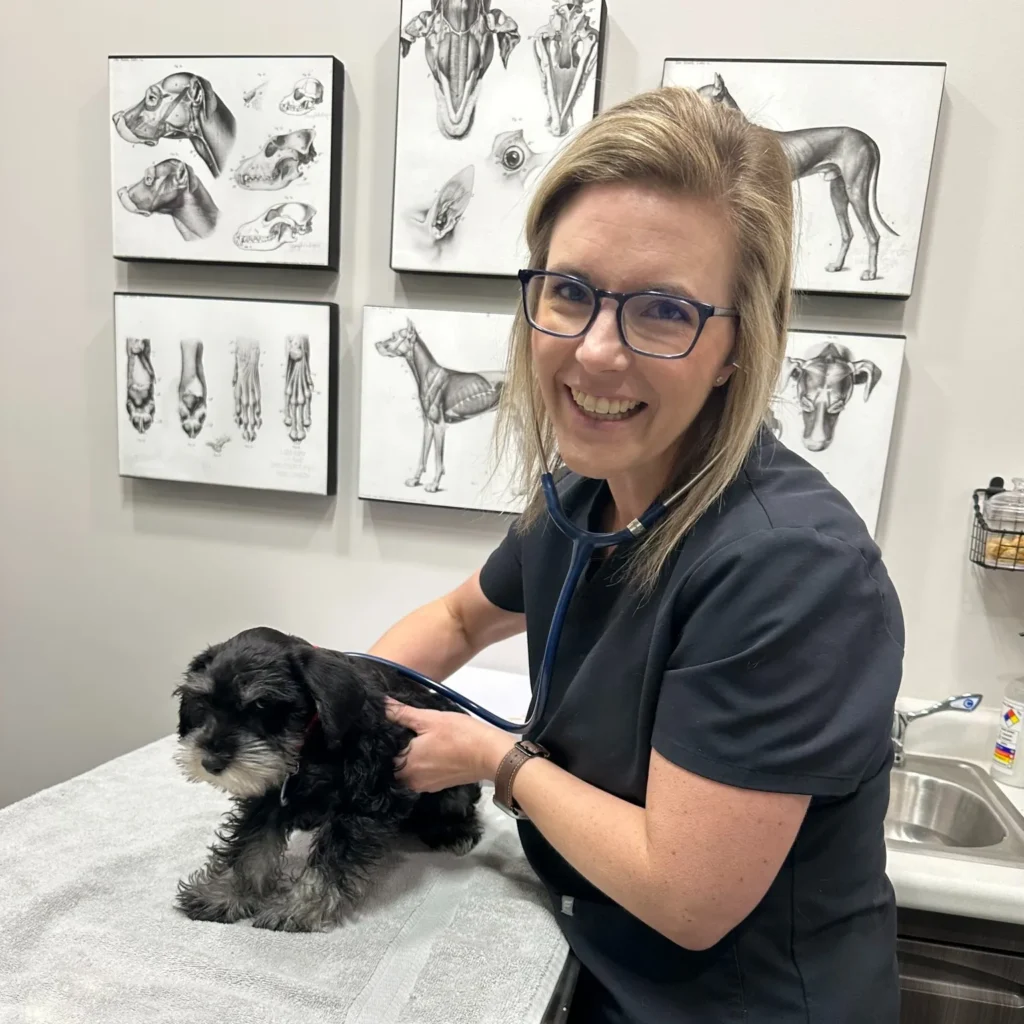
Reviewed By By Dr. Grace Mullen, DVM
Dr. Grace Mullen is a licensed veterinarian with more than 8 years of experience in small animal medicine and currently serves as a Hospital Medical Director. She earned her Doctor of Veterinary Medicine (DVM) degree from Michigan State University College of Veterinary Medicine and has dedicated her career to helping dogs live healthier lives through preventive care, internal medicine, and evidence-based nutrition.