
Can Dogs Eat Pumpkin? A Vet-Reviewed Guide to Amounts, Seeds, Pie, and Halloween Risks

By Dr. Lara Friedman, DVM. Reviewed By Dr. Grace Mullen, DVM
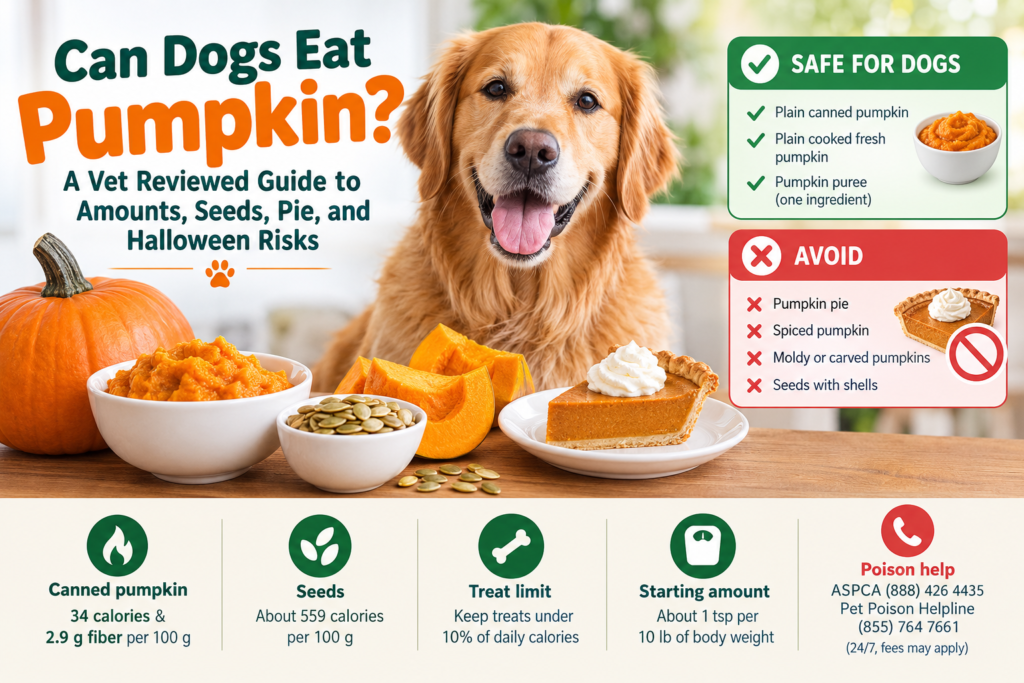
Yes. Plain canned pumpkin or plain cooked fresh pumpkin is safe for most dogs in small amounts. Skip pumpkin pie, spiced pumpkin, moldy or carved pumpkins, and seeds with shells. Keep all treats under 10% of daily calories, and start with about 1 teaspoon per 10 pounds of body weight. Amounts by weight, a seed chart, and a plan for “my dog ate it” are below.
Quick facts
- Canned pumpkin: 34 calories and 2.9 g fiber per 100 grams, or about 5 calories and 0.4 g fiber per tablespoon (USDA).
- Seeds: about 559 calories per 100 grams, so a little goes a long way.
- Treat limit: 10% of daily calories (UC Davis).
- Skip: pie, pie mix, spice, carved or moldy pumpkin, and seeds with shells.
- Poison help: ASPCA (888) 426- 4435 or Pet Poison Helpline (855) 764- 7661. Both answer 24 hours a day, and fees may apply.
Pumpkin Nutrition for Dogs: Canned, Raw, Seeds, and Pie Mix Compared
Is pumpkin good for dogs? In small amounts, yes. It has few calories, some fiber, and beta-carotene. It is a treat or a topper, not a medicine and not a meal.
“`html| Per 100 g | Canned, No Salt | Raw | Hulled Seeds | Pie Mix |
|---|---|---|---|---|
| Calories | 34 | 26 | 559 | 104 |
| Fiber | 2.9 g | 0.5 g | 6 g | N/A |
| Protein | 1.1 g | 1.0 g | 30 g | 1.1 g |
| Sodium | 5 mg | 1 mg | N/A | 208 mg |
Source: USDA FoodData Central, human food entries.
Two fiber claims circulate online, and both are partly true. A cup of canned pumpkin has about 7 grams of fiber, but a tablespoon has only about 0.4 grams. A board-certified veterinary nutritionist, writing about cats, notes that canned pumpkin has far less fiber per tablespoon than psyllium, 0.4 g against 9 g, so pumpkin alone may not give a clinical response. Dogs can turn beta carotene into vitamin A, and beta carotene has low toxicity in dogs (WikiVet). Complete dog foods already meet vitamin needs, as the FDA explains.
How Much Pumpkin Can Dogs Eat? Starting Amounts by Weight
Calories rarely limit pumpkin, because a tablespoon has about 5 calories. Fiber does. Too much at once causes gas and loose stool, so start low and add slowly over a week.
“`html| Dog Weight | Starting Amount per Day | Usual Upper Amount per Day |
|---|---|---|
| 5 lb | 1/2 tsp | 1/2 tbsp |
| 10 lb | 1 tsp | 1 tbsp |
| 20 lb | 2 tsp | 2 tbsp |
| 40 lb | 4 tsp | 4 tbsp |
| 60 lb | 2 tbsp | 6 tbsp |
| 80 lb | 2 2/3 tbsp | 8 tbsp |
Split the daily amount across meals and mix it into food. Sources disagree, with advice ranging from 1 teaspoon to 1 tablespoon per 10 pounds, and no controlled trial sets the dose. Treat these as common ranges, and let your vet adjust them for a health reason. Pumpkin still counts toward the 10% treat limit, which matters because 59% of U.S. dogs are overweight or obese.
Can Dogs Eat Pumpkin Puree? Canned, Homemade, and Frozen Cubes
Yes, if the label lists one ingredient: pumpkin. Plain canned pumpkin and pumpkin pie mix sit side by side in the baking aisle and look alike. Pie mix has 104 calories and 208 mg of sodium per 100 grams, against 34 calories and 5 mg for plain.
To make your own, peel a pie pumpkin, scoop out the seeds and guts, cube the flesh, and steam or bake it plain until soft. Mash it, and freeze spoonfuls in an ice cube tray. Add no salt, butter, oil, or sugar.
Can Dogs Eat Pumpkin Seeds? Raw, Roasted, and With Shells
Yes, in small amounts, shelled, and ground or chopped. Seeds are dense in calories and fat, and fat raises the risk of pancreatitis, a painful swelling of the pancreas (Cornell, veterinary review).
Can dogs eat pumpkin seeds with shells?
No. Shells are tough, hard to chew, and can lodge in the throat or gut. Cornell lists vomiting, lost appetite, and belly pain as the usual blockage signs.
Can dogs eat pumpkin seeds raw?
Raw seeds are hard to digest. Shell them, dry roast them with no oil or salt, cool them, and grind them.
How many pumpkin seeds can a dog eat?
Seeds are about 16 times the calories of canned pumpkin per gram, so use the chart. It gives about a quarter of the treat limit as ground, hulled seeds.
“`html| Dog Weight | Ground Hulled Seeds per Serving |
|---|---|
| 5 lb | 1/4 tsp |
| 10 lb | 1/2 tsp |
| 20 lb | 1 tsp |
| 40 lb | 1 1/2 tsp |
| 60 lb | 2 tsp |
| 80 lb | 2 1/2 tsp |
The chart assumes a teaspoon of ground hulled seeds weighs about 3 grams and has about 17 calories. Give seeds a few times a week, not daily.
Are store-bought roasted seeds safe? Usually not. Snack seeds come salted, oiled, or flavored with garlic or onion powder, which the ASPCA lists as toxic.
Do pumpkin seeds deworm dogs? The evidence is mixed. A university trial found ground seeds did not reduce worm egg counts in goat kids, and a chicken study found moderate effects compared to a drug. I found no verified dog trial. Ask your vet for a stool test and a proven dewormer.
Can Dogs Eat Pumpkin Pie? Pie, Spice, Bread, and Lattes
No. The pumpkin is fine. The pie is the problem: sugar, fat, crust, and salt.
Is nutmeg in pumpkin pie toxic to dogs? Large amounts of nutmeg can raise heart rate and blood pressure and may cause seizures, according to Pet Poison Helpline. A pinch in a slice is a smaller risk than the sugar and fat. A whole pie cooling on the counter is a different story.
Does pumpkin pie contain xylitol? Not usually. Check the label on sugar-free or store-bought pies, because xylitol is dangerous for dogs and can cause low blood sugar and liver failure (FDA).
“`html| Item | Verdict | Why |
|---|---|---|
| Pumpkin pie or pie mix | No | Sugar, fat, salt, spices |
| Pumpkin bread or muffins | No | Sugar, fat, sometimes raisins or nuts |
| Pumpkin spice latte | No | Sugar, caffeine, spices |
| Pumpkin soup | No | Onion, garlic, salt, cream |
| Roasted seeds with seasoning | No | Salt, garlic, onion |
| Plain canned or cooked pumpkin | Yes | No add-ins |
Can Dogs Eat Pumpkins? Whole, Carved, and Decorative
Plain flesh, yes. Whole and carved pumpkins, no. Carved pumpkins last only about 3 to 5 days, less in warm weather. The ASPCA warns that cut pumpkins can grow mold that causes tremors or seizures, and dried gourds can cause blockages.
Is a moldy jack-o’-lantern dangerous for dogs? Yes. Pet Poison Helpline describes tremorgenic mycotoxins that form in moldy food, with shivering, twitching, loss of body control, high body temperature, and seizures. Treated early, dogs usually recover. Toss carved pumpkins by day 3 to 5, keep the compost bin closed, and watch your dog near the porch pile after Halloween.
What about ornamental gourds and mini decorative pumpkins? Skip them. They are for decoration and can cause blockages. Only feed pie or sugar pumpkins you cooked yourself.
Can Dogs Eat Pumpkin Guts? The Stringy Pulp Inside
A small spoonful of fresh pulp from a pumpkin you just opened is not toxic, but it is stringy and hard to chew, and it comes mixed with seeds and shells. I found no vet source that covers this, so the cautious advice is to scoop out the seeds first and feed only a teaspoon or two. Throw away any guts from a pumpkin that was carved days ago. The mold clock above applies.
Can Dogs Eat Pumpkin Skin? Rind, Stem, and Leaves
Peel it. The rind is tough, and a hard piece can lodge in the throat or gut. The Red Cross lists pawing at the mouth, gasping, loud breathing, and blue or white gums as choking signs. Stems and leaves are prickly and hard to digest, so skip them too.
Raw vs Cooked Pumpkin for Dogs: Which Is Better?
Cooked. Small tastes of raw flesh are not toxic, but raw pumpkin is dense and hard to chew and digest. Cooked flesh is soft and easier on the stomach. Steam or bake peeled pumpkin plain, cool it, and mash it.
Does Pumpkin Help With Dog Diarrhea or Constipation?
Vets often suggest plain pumpkin for mild stool problems, but I found no controlled dog trial. Many pages cite studies on dosing that I could not verify, and their numbers conflict.
Is canned pumpkin good for dog diarrhea? It may help firm stool in mild cases, because the fiber holds water. A tablespoon has little fiber, so it will not fix a serious problem.
Does pumpkin help dog constipation? It adds moisture and a little fiber, which may soften mild cases. Too much can cause loose stool.
Skip home treatment and call your vet for blood in the stool, repeated vomiting, lethargy, or belly pain. Call for puppies and seniors too, and if nothing improves in 24 to 48 hours.
Side Effects and Real Risks: What Can Go Wrong After Pumpkin
“`html| Problem | What You May See | Evidence |
|---|---|---|
| Gas or loose stool | After too much fiber too fast | Start small |
| Pancreatitis | Vomiting, belly pain, no appetite | Seeds, pie fat; Cornell |
| Choking or blockage | Gagging, pawing at mouth, vomiting | Red Cross, Cornell |
| Mold toxin | Tremors, seizures | ASPCA, Pet Poison Helpline |
| Sodium excess | Thirst, vomiting | Canned with salt, pie mix |
| Sugar and spices | Upset stomach, weight gain | Pie, bread, lattes |
| Food reaction | Itching, ear infections, loose stool | Any new food |
Plain pumpkin flesh is low risk. The documented problems come from seeds, mold, and pie.
Which Dogs Need Extra Care With Pumpkin?
- Pancreatitis history: Seeds and pie add fat. Cornell says most dogs that survive pancreatitis stay on a strictlow-fatt, low-protein diet. Ask first.
- Diabetes: Canned pumpkin has 3.3 g of natural sugar per 100 g. Ask your vet.
- Kidney or heart disease: Choose plain pumpkin with no salt added.
- Overweight dogs: Pumpkin has few calories, but count it and the seeds.
- Small dogs: Seeds and rind are bigger choking risks. Grind and grate.
- Prescription diets: VCA notes that extras can undermine them. Ask first.
- Puppies and seniors: Use tiny amounts, and call your vet for diarrhea.
My Dog Ate Pumpkin Pie, a Moldy Pumpkin, or a Lot of Seeds: Step by Step
A few spoonfuls of plain pumpkin need no call. For pie, mold, a big pile of seeds, or shells:
- Take away the rest. Note what your dog ate, how much, when, and your dog’s weight.
- Call your vet or the nearest 24-hour emergency animal hospital.
- Or call the ASPCA at (888) 426- 4435 or the Pet Poison Helpline at (855)764- 76611. Fees may apply.
- Do not induce vomiting or give milk or home remedies unless a professional says so (Pet Poison Helpline, University of Illinois).
- Bring the label or a photo of the pie, and tell them the ingredients.
- Go to the emergency clinic now for tremors, seizures, collapse, repeated vomiting, or trouble breathing.
Save your regular vet and your nearest 24-hour clinic in your phone before the holidays.
How to Prepare Pumpkin for Dogs in 6 Steps
- Buy plain canned pumpkin, or a firm pie pumpkin.
- Wash, peel, and scoop out the seeds and guts.
- Cube the flesh and steam or bake it plain until soft.
- Cool and mash it.
- Start with the small amount in the chart and watch for a day.
- Count it in the daily treat budget.
Spread it on a lick mat, stir it into kibble, or freeze cubes.
Quick Answers
Can dogs eat pumpkin every day? A small plain amount fits inside the 10% treat limit for most healthy dogs, but there is little reason to. It adds mostly water and a little fiber.
Can puppies eat pumpkin? Yes, in tiny plain amounts. Puppy food should supply nearly all calories.
Can diabetic dogs eat pumpkin? Only with your vet’s approval, since it has natural sugar.
Is pumpkin spice safe for dogs? No. Spice mixes carry sugar and spices, and drinks add caffeine. Pet Poison Helpline says pumpkin itself is not toxic but can upset the stomach.
Can pumpkin replace dog food? No. The FDA says treats are usually not complete and balanced.
Can dogs eat pumpkin stems or leaves? No. They are prickly and hard to digest.
This article is general information, not a diagnosis. Your vet knows your dog’s health history.
Read out more about other vegetables
Sources
- UC Davis, Treat Guidelines for Dogs
- USDA FoodData Central
- FDA, “Complete and Balanced” Pet Food
- FDA, Xylitol and Dogs
- WikiVet, Retinol and Carotenoids
- Veterinary nutritionist note on pumpkin fiber vs psyllium
- Cornell, Foreign Body Obstruction in Dogs
- Cornell Riney Canine Health Center, Treats and Scraps
- Canine pancreatitis risk factors (PubMed Central)
- ASPCA, People Foods to Avoid
- ASPCA, Fall Pet Toxins
- Pet Poison Helpline, Nutmeg
- Pet Poison Helpline, Pumpkin Spice
- Pet Poison Helpline, Moldy Food Toxins
- Pet Poison Helpline, Top Ten Things to Remember
- University of Illinois, Household Toxins
- American Red Cross, Dog Choking
- Delaware State University Extension, Pumpkin Seeds and Worms
- Turkish Journal of Veterinary and Animal Sciences, Pumpkin Seeds in Chickens
- Old Farmer’s Almanac, Carved Pumpkin Lifespan
- APOP, 2022 Pet Obesity Survey
- VCA Animal Hospitals, Dog Treats
Written By Dr. Lara Friedman, DVM
Dr. Lara Friedman, DVM, is a veterinarian with 6+ years of experience across hospital, clinic, and shelter medicine, specializing in canine nutrition and preventive care. A graduate of Colorado State University and a Fear Free Certified Professional®, she writes to help dog owners prevent diet-related health issues before they start. She shares her home with her dog, Duke.
Reviewed By Dr. Grace Mullen, DVM
Dr. Grace Mullen, DVM, is a veterinarian and Hospital Medical Director with more than 8 years of experience in small animal medicine, with a clinical focus on internal medicine and canine nutrition. A graduate of Michigan State University College of Veterinary Medicine and a member of the American Veterinary Medical Association (AVMA), she writes evidence-based articles that help dog owners make safe, informed feeding decisions. She lives with her two dogs, Milo and Cooper.