Can Dogs Eat Plantains? A Vet Reviewed US Guide to Ripe, Sweet, Fried, and Chips

By Dr. Lara Friedman, DVM. Reviewed By Dr. Grace Mullen, DVM
Published: 30 October, 2026
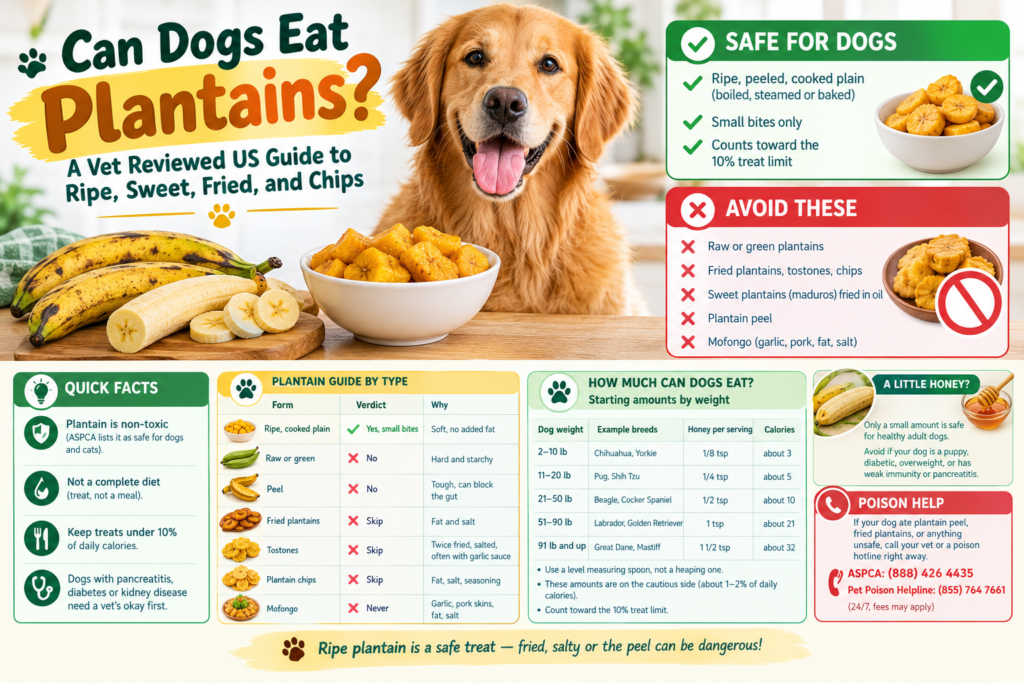
Yes, dogs can eat plantains when they are ripe, peeled, cooked plain, and served in small bites. Plantains are not toxic, and the ASPCA lists them as safe for dogs and cats. The trouble starts with how people cook them. Fried plantains, tostones, and plantain chips add oil, salt, and sometimes garlic or onion. Those forms can upset your dog’s stomach or trigger pancreatitis.
Key points
- Ripe plantain, peeled and cooked plain, is safe for most dogs in small bites.
- Fried plantains, tostones, and plantain chips add oil, salt, and sometimes garlic.
- Never give the peel. It can block the gut.
- Treats, plantain included, should stay under 10 percent of a dog’s daily calories.
- Dogs with pancreatitis, diabetes, or kidney disease need a vet’s okay first.
Can dogs eat plantains? Quick answer by type
Plantain is not a poison for dogs. The way it is cooked decides the answer.
| Form | Verdict | Why |
|---|---|---|
| Ripe, boiled, steamed, or baked plain | Yes, small bites | Soft, no added fat |
| Raw or green | No | Hard and starchy |
| Peel | No | Tough, can block the gut |
| Sweet plantains (maduros) fried in oil | Skip | Oil and sugar |
| Fried plantains | Skip | Fat and salt |
| Tostones | Skip | Twice fried, salted, often served with garlic sauce |
| Plantain chips | Skip | Fat, salt, seasoning |
| Mofongo | Never | Garlic, pork skins, fat, salt |
Are plantains safe for dogs? What the ASPCA says
The ASPCA lists plantain (Musa) as non-toxic to dogs and cats. So if you wonder whether plantains are ok for dogs, or whether plantains are okay for dogs, the fruit itself passes. The ASPCA also notes that eating any plant material can cause vomiting or an upset stomach. Portion and preparation still matter.
Plantain, plantain weed, and plantain lily
Three different plants share the name. The fruit is a cousin of the banana. Broadleaf plantain is a common lawn weed. Hosta, also called plantain lily, is a garden plant that the ASPCA lists as toxic to dogs and cats. It contains saponins and can cause vomiting, diarrhea, and depression. If your dog chewed a garden plant and not the fruit, call a vet or a poison hotline.
Plantain vs. banana
Plantains are starchier, less sweet, and usually cooked. A banana is soft and can be sliced raw. Both are Musa fruits and share the same ASPCA entry, but a banana slice takes no cooking, so it is the easier treat.
Can dogs eat cooked plantains? How to prepare them
Yes. Cooking is the step that makes plantain dog-friendly. A study in the Journal of Animal Science reports that well-cooked starch is digested almost completely in dogs. Less cooked starch moves on to the large intestine, where gut bacteria ferment it. That can mean extra gas and loose stool.
- Pick a ripe plantain. Yellow with black spots is best. It is softer and sweeter than a green one.
- Peel it and throw the peel away. Use a trash can with a lid.
- Boil, steam, or bake it plain. No oil, butter, salt, sugar, garlic, onion, or spices. Cook until a fork slides in easily.
- Let it cool. Test a piece on your wrist.
- Cut it to size. Use pea-sized pieces for small dogs, thumbnail-sized for large dogs, or mash it.
- Start with one bite. Wait 24 hours before giving more. Stop if you see gas, loose stool, or vomiting.
Can dogs eat raw or green plantains?
No. Raw plantain is hard, starchy, and tough to chew. Chunks can lead to choking or a blockage, mostly in small dogs and fast eaters. Green plantain is firm even after cooking, so choose ripe ones. Can dogs eat plantain peel? Also no. The peel is fibrous, and a large piece can lodge in the stomach or intestines.
Can dogs eat sweet plantains? What about maduros?
Sweet plantains are just ripe plantains. At many US Latin restaurants and grocery store hot bars, they are fried in oil and sometimes sprinkled with sugar. Can dogs have sweet plantains? Plain ripe plantain that was boiled, steamed, or baked is fine in small amounts. Fried maduros are a skip. Dogs do not need added sugar, and the oil adds fat and calories. If your dog steals one slice, watch for stomach upset and do not panic.
Can dogs eat fried plantains? Oil, salt, and pancreatitis
Skip them. Can dogs have fried plantains? A dropped bite will not poison a healthy dog, but do not offer them on purpose. Raw plantain has about 0.4 grams of fat per 100 grams, according to USDA data. Frying soaks it in oil. The Merck Veterinary Manual lists eating the wrong foods as a common risk factor for pancreatitis in dogs, and milder cases are managed with a low-fat diet and low-fat treats. Fried plantains are also often salted. The ASPCA warns that large amounts of salt can cause thirst, vomiting, and tremors.
Call your vet if your dog starts vomiting, has belly pain, stops eating, or has diarrhea in the day or two after eating fried food.
Can dogs eat tostones?
No. Tostones are green plantains fried twice and salted. They are often served with garlic sauce, such as Cuban mojo. The ASPCA says onions, garlic, and chives can irritate the gut and damage red blood cells. Mofongo adds mashed garlic and pork skins to fried plantain, which makes it worse. Keep both away from your dog.
Can dogs eat plantain chips? Can dogs have plantain chips?
Plantain chips are a bad treat. USDA data lists salted plantain chips at about 531 calories and 29.6 grams of fat per 100 grams. Boiled ripe plantain has about 115 calories and almost no fat. That is more than four times the calories, plus the salt. Flavored bags may also have garlic, onion, chili, or lime seasoning. One chip that fell on the floor is not an emergency. A bowl of them is a problem.
Can puppies eat plantain chips?
No. Puppies have small stomachs and need complete puppy food. Chips add salt and fat that growing dogs do not need. A tiny bite of plain cooked plantain is the most you should try, and only after your vet agrees.
Can dogs eat platanos? Spanish names at US markets
In Spanish, plátano can mean banana or plantain, depending on the country and the store. Plátano macho and plátano verde are cooking plantains. Plátano maduro is the ripe one. If a recipe from a Puerto Rican, Cuban, Dominican, or Colombian kitchen uses boiled plátano, a plain bite is fine. Fritos, tostones, patacones, maduros fritos, and mofongo are not. Check how it was cooked before you share.
Are plantains good for dogs? Benefits and limits
Plantain for dogs is a treat, not a health food. USDA data lists about 122 calories, 2.3 grams of fiber, and 499 mg of potassium per 100 grams of raw plantain, and almost no fat. That is more potassium than a banana, which has about 358 mg. A dog on a complete and balanced food already gets the vitamins and minerals it needs, and the WSAVA and AAHA guidelines say treats should not upset that balance.
Myth check
Some sites say plantain fights cancer, eases arthritis, or helps a dog pass a swallowed object. We found no veterinary source that backs those claims. If your dog swallowed something it should not have, call a vet. Feeding plantain at home will not fix a blockage.
Are plantains bad for dogs? Risks to know
- Too much. Plantain is dense in starch and calories, so extra weight is the common problem.
- Frying oil and salt. They raise the risk of stomach upset and pancreatitis.
- Garlic and onion. They show up in sauces and seasoned chips.
- Peel and raw chunks. They can cause choking or a blockage.
- Allergy. This looks uncommon. The Merck Veterinary Manual lists beef, dairy, chicken, wheat, and lamb as the most common food allergens in dogs. Plantain is not on that list.
| Symptoms | What to Do |
|---|---|
| Gas, soft stool, one bout of vomiting | Hold the plantain and watch |
| Repeated vomiting, belly pain, no appetite, straining, or a swollen belly | Do not wait. A blockage is serious. |
How much plantain can a dog eat? Calorie math
Use the 10 percent rule. Tufts University’s nutrition team says no more than 10 percent of a dog’s calories should come from anything other than the main dog food, and UC Davis uses the same limit. Tufts gives an example: a 10-pound dog eats about 300 calories a day, so its treat limit is 30 calories. That limit must cover all treats that day.
Boiled ripe plantain has about 115 calories per 100 grams. Here is what that looks like if plantain used the whole treat budget:
| Dog Eats per Day | Treat Budget | Plantain, If It Used All of It |
|---|---|---|
| 300 calories | 30 calories | About 26 grams, or 2 tablespoons mashed |
| 600 calories | 60 calories | About 52 grams, or ¼ cup mashed |
| 1,200 calories | 120 calories | About 104 grams, or ½ cup mashed |
We suggest keeping plantain to half of the budget and offering it once or twice a week.
Can dogs with pancreatitis, diabetes, or kidney disease eat plantains?
Ask your vet first. A dog with a history of pancreatitis should avoid anything fried, and even plain plantain needs a vet’s okay. Plantain has about 31 grams of carbohydrate per 100 grams, so diabetic dogs need a plan that counts it. Plantain is also high in potassium, and some dogs on kidney or heart care need potassium kept in check. Overweight dogs should pick lower-calorie treats.
Can cats eat plantain (or plaintain)?
The ASPCA lists plantain as non-toxic to cats. Cats get their nutrition from meat, so plantain adds little. A tiny bite of plain, cooked, ripe plantain will not hurt most cats. Fried plantains, chips, and garlic sauces follow the same rules as for dogs. Hosta is toxic to cats too.
What to do if your dog ate fried plantains, peel, or too much
- Take away what is left. Note what it was and how much.
- Check the seasoning. Garlic, onion, and large amounts of salt change the plan.
- Call your vet or an ER vet. Or call ASPCA Animal Poison Control at (888) 426- 4435 or Pet Poison Helpline at (855)764- 76611. A fee applies. Pet Poison Helpline lists $89 per incident on its site.
- Go in now for blockage signs. Merck lists repeated vomiting, loss of appetite, belly pain, and trouble passing stool.
Safer fruit swaps
A banana slice needs no cooking and shares the ASPCA non-toxic listing. Apple slices without the core and seeds are another easy option. Count both in the 10 percent budget.
Frequently asked questions
Can dogs have plantain?
Yes, ripe plantain cooked plain, peeled, and cut small. Skip fried plantains, chips, tostones, and any seasoned version.
Can my dog eat plantains every day?
No. Plantain is starchy and calorie-dense. Keep it to an occasional treat inside the 10 percent limit.
Can dogs eat plantain skin?
No. Peel the plantain and throw the peel out of reach. A swallowed piece can cause a blockage.
Can dogs eat plantain if they have a sensitive stomach?
Start with one small bite of plain cooked plantain and wait 24 hours. If stool gets loose, stop.
The bottom line
Can dogs eat plantains? Yes, when they are ripe, peeled, cooked plain, and cut small, as an occasional treat. Skip the fried versions, tostones, mofongo, and chips, and never give the peel. Keep the 10 percent rule in mind, ask your vet if your dog has a health condition, and save the poison hotline numbers in your phone.
How we wrote this
We checked health claims against ASPCA, Merck Veterinary Manual, Tufts University, UC Davis, WSAVA, and AAHA guidance; a Journal of Animal Science study; and USDA data. A licensed veterinarian reviewed the article. Hotline details were last checked October 29, 2026.
Read more about Fruits
References
- ASPCA: Musa paradisiaca (plantain, banana)
- ASPCA: Hosta (plantain lily)
- ASPCA: People Foods to Avoid Feeding Your Pets
- ASPCA Animal Poison Control
- Pet Poison Helpline
- Merck Veterinary Manual: Pancreatitis in dogs
- Merck Veterinary Manual: Gastrointestinal obstruction in small animals
- Merck Veterinary Manual: Food allergy overview
- Journal of Animal Science: Food processing, starch, and dog gut health
- Tufts Cummings School: treats and the 10 percent rule
- UC Davis Veterinary Medicine: Treat guidelines for dogs
- AAHA and WSAVA guidance, PubMed Central
- USDA FoodData Central

Written By Dr. Lara Friedman, DVM
Dr. Lara Friedman, DVM, is a veterinarian with 6+ years of experience across hospital, clinic, and shelter medicine, specializing in canine nutrition and preventive care. A graduate of Colorado State University and a Fear Free Certified Professional®, she writes to help dog owners prevent diet-related health issues before they start. She shares her home with her dog, Duke.

Reviewed By Dr. Grace Mullen, DVM
Dr. Grace Mullen, DVM, is a veterinarian and Hospital Medical Director with more than 8 years of experience in small animal medicine, with a clinical focus on internal medicine and canine nutrition. A graduate of Michigan State University College of Veterinary Medicine and a member of the American Veterinary Medical Association (AVMA), she writes evidence-based articles that help dog owners make safe, informed feeding decisions. She lives with her two dogs, Milo and Cooper.